Sign in to see ingredients
Create a free account to unlock this content
Don't have an account? Sign up free
Per serving
Calculating nutrition...
- 1
Trim and season
Get yourself a whole 3-bone rack of plate ribs, 4 to 5 pounds. Not back ribs, not the little grocery-store rack with bone showing through the top. You want the meat stacked thick on top of the bones. Trim the thin silverskin and hard fat off the meat side just enough to expose the surface. Leave the membrane on the bone side alone completely, it holds everything together. Mix the salt and pepper 50/50 and coat all sides heavy, a real visible layer. If you have the time, salt it the night before and leave it uncovered on a rack in the fridge. That dry brine gives you noticeably better bark. Otherwise let it sit out 30 minutes before it hits the smoker.
- 2
Fire the smoker to 275
275F, not 225. I know that goes against everything you learned on pork ribs, but the bone and membrane on this cut insulate the meat so hard that low and slow leaves you with tough, under-rendered fat. At 275 the fat melts into the meat and the bark sets. Use post oak if you can get it, that's the Texas standard for beef. Pecan is a fine second. Stay away from apple or cherry here, they're too light to stand up to this much beef. One or two chunks is plenty. Too much smoke over an 8-hour cook turns bitter.
- 3
Smoke bone-side down
Lay the rack bone-side down. The bone works as a heat shield and protects the meat from the direct heat underneath. Leave it alone the first full hour so the bark foundation can set. Resist the urge to open the door. After that first hour, start spritzing the sides and exposed edges with beef broth every 45 minutes to an hour. The top takes care of itself, it's the sides and ends that dry out on you.
- 4
Wrap when the bark sets
Somewhere between hour 3 and 5 you'll see the bark go deep mahogany, firm to the touch, with the meat starting to pull back off the bone ends. When the thickest part of the meat reads 165 to 170F internal and the bark is where you want it, give it one last spritz and wrap tight in a double layer of pink butcher paper, seams tucked under. Back on the smoker bone-side down. Butcher paper over foil every time, it lets steam escape so the bark stays firm instead of going soft and steamy. If you want a harder crust and you're planning a long rest, you can skip the wrap, just add an hour or two and keep spritzing.
- 5
Cook to feel, not the clock
Your target is 200 to 205F internal, but the number is a guide, not the finish line. Start probing the thickest part of the meat once you're up around 200. When it's ready the probe slides in with almost no resistance, like pushing into a jar of warm peanut butter. Any pushback at all and it needs more time no matter what the thermometer says. On a thick rack the gap between almost done and done can be another 30 to 45 minutes. Check every 15 to 20 minutes once you're close. Figure 7 to 8 hours wrapped, 8 to 9 unwrapped.
- 6
Rest it, do not rush this
This is where people throw away a perfect cook. Pull the ribs, wrap in a fresh sheet of butcher paper if they aren't already, and rest a minimum of an hour at room temp. An hour or two is better. For a long hold, set the wrapped ribs in a dry cooler, no ice, lined with a towel and they'll hold serving temp 2 to 4 hours and often come out better for it. The rest lets the juices and rendered fat settle back into the meat. Slice too early and all of it runs out onto the board. Give it the time.
- 7
Slice and serve
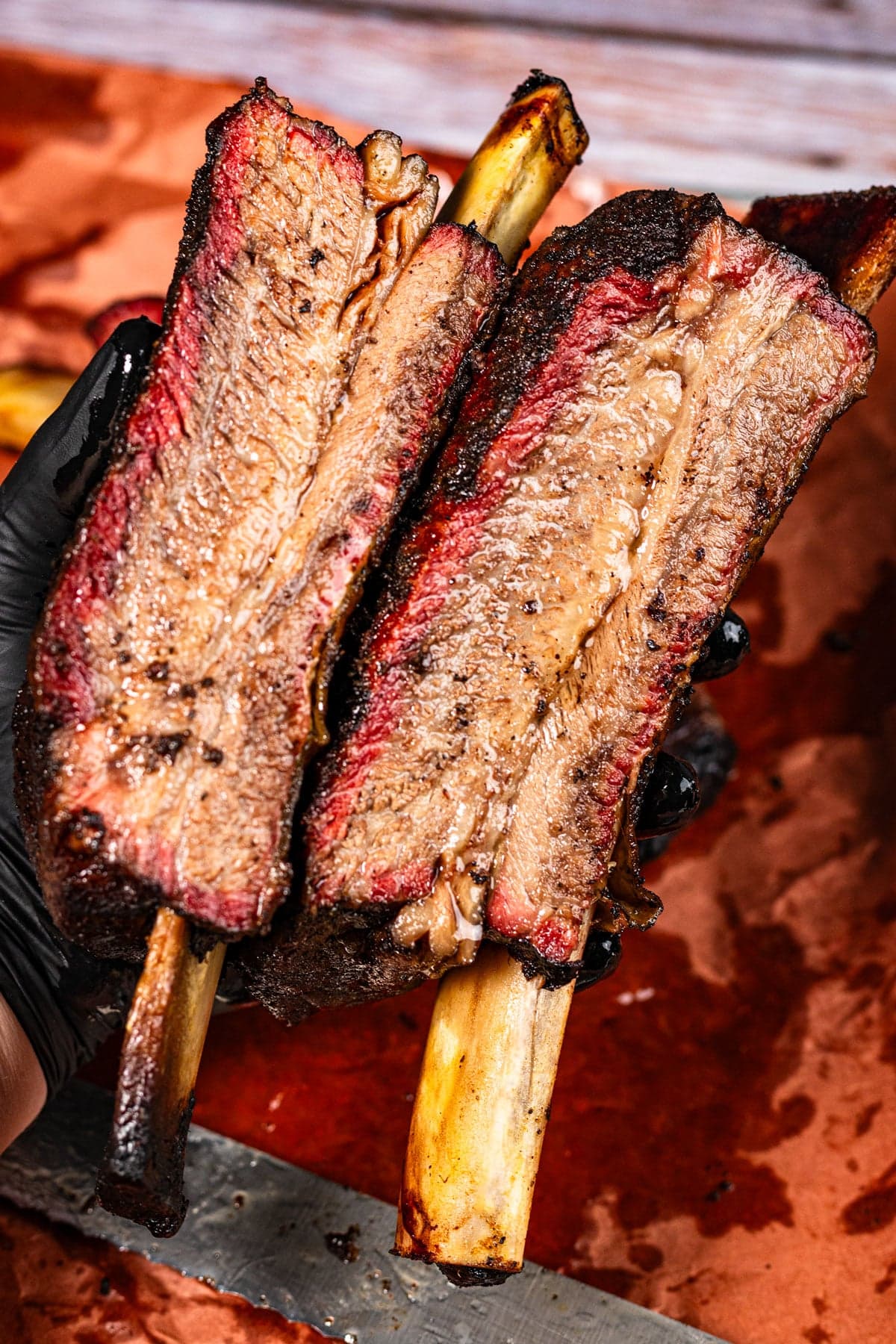
Pull the paper and cut straight between the bones. Each bone is its own portion and it's rich, so one rib satisfies most folks and two is a serious plate. You should see a clean smoke ring under a black bark and fat that rendered into the meat instead of out of it. That's brisket-level beef on a bone, and it's the best thing you'll pull off a smoker all year.
Sign in to see all instructions
Create a free account to unlock this content
Don't have an account? Sign up free
Smoked Beef Plate Ribs (Texas Dino Ribs)
Created by: SmokeRingSteve
Ingredients
- 5 lb beef plate ribs
- 2 tbsp kosher salt
- 2 tbsp coarse black pepper
- 1 cup beef broth
Instructions
- Trim and seasonGet yourself a whole 3-bone rack of plate ribs, 4 to 5 pounds. Not back ribs, not the little grocery-store rack with bone showing through the top. You want the meat stacked thick on top of the bones. Trim the thin silverskin and hard fat off the meat side just enough to expose the surface. Leave the membrane on the bone side alone completely, it holds everything together. Mix the salt and pepper 50/50 and coat all sides heavy, a real visible layer. If you have the time, salt it the night before and leave it uncovered on a rack in the fridge. That dry brine gives you noticeably better bark. Otherwise let it sit out 30 minutes before it hits the smoker.
- Fire the smoker to 275275F, not 225. I know that goes against everything you learned on pork ribs, but the bone and membrane on this cut insulate the meat so hard that low and slow leaves you with tough, under-rendered fat. At 275 the fat melts into the meat and the bark sets. Use post oak if you can get it, that's the Texas standard for beef. Pecan is a fine second. Stay away from apple or cherry here, they're too light to stand up to this much beef. One or two chunks is plenty. Too much smoke over an 8-hour cook turns bitter.
- Smoke bone-side downLay the rack bone-side down. The bone works as a heat shield and protects the meat from the direct heat underneath. Leave it alone the first full hour so the bark foundation can set. Resist the urge to open the door. After that first hour, start spritzing the sides and exposed edges with beef broth every 45 minutes to an hour. The top takes care of itself, it's the sides and ends that dry out on you.
- Wrap when the bark setsSomewhere between hour 3 and 5 you'll see the bark go deep mahogany, firm to the touch, with the meat starting to pull back off the bone ends. When the thickest part of the meat reads 165 to 170F internal and the bark is where you want it, give it one last spritz and wrap tight in a double layer of pink butcher paper, seams tucked under. Back on the smoker bone-side down. Butcher paper over foil every time, it lets steam escape so the bark stays firm instead of going soft and steamy. If you want a harder crust and you're planning a long rest, you can skip the wrap, just add an hour or two and keep spritzing.
- Cook to feel, not the clockYour target is 200 to 205F internal, but the number is a guide, not the finish line. Start probing the thickest part of the meat once you're up around 200. When it's ready the probe slides in with almost no resistance, like pushing into a jar of warm peanut butter. Any pushback at all and it needs more time no matter what the thermometer says. On a thick rack the gap between almost done and done can be another 30 to 45 minutes. Check every 15 to 20 minutes once you're close. Figure 7 to 8 hours wrapped, 8 to 9 unwrapped.
- Rest it, do not rush thisThis is where people throw away a perfect cook. Pull the ribs, wrap in a fresh sheet of butcher paper if they aren't already, and rest a minimum of an hour at room temp. An hour or two is better. For a long hold, set the wrapped ribs in a dry cooler, no ice, lined with a towel and they'll hold serving temp 2 to 4 hours and often come out better for it. The rest lets the juices and rendered fat settle back into the meat. Slice too early and all of it runs out onto the board. Give it the time.
- Slice and servePull the paper and cut straight between the bones. Each bone is its own portion and it's rich, so one rib satisfies most folks and two is a serious plate. You should see a clean smoke ring under a black bark and fat that rendered into the meat instead of out of it. That's brisket-level beef on a bone, and it's the best thing you'll pull off a smoker all year.