Anadama Bread (Molasses-Cornmeal Loaf with a Science-Backed Soft Crumb)
Sign in to see ingredients
Create a free account to unlock this content
Don't have an account? Sign up free
Per serving
Calculating nutrition...
- 1
Gelatinize the cornmeal
In a small saucepan, bring 1/2 cup of the water and the cornmeal to a boil, then cook and stir until the cornmeal drinks up the water and pulls away from the pan, about 30 seconds. Here's the why: raw cornmeal is basically tiny rocks of starch that will stay gritty in your bread. Heating it with water gelatinizes those starch granules, so they swell, soften, and turn creamy. That gelatinized starch also holds onto a ton of moisture, which is the real secret to why anadama stays soft and sliceable for days.
- 2
Melt in the molasses and butter
Off the heat, stir the molasses and butter into the hot cornmeal mush until the butter melts and everything is smooth. Molasses isn't just for that deep brown color and gentle sweetness. It's loaded with simple sugars that give the yeast a fast, easy first meal, and it's hygroscopic (it grabs water from the air), which is another reason this loaf resists going stale.
- 3
Cool it down so you don't murder the yeast
Let the cornmeal mixture cool to 110-115 degrees F, roughly warm-bath temperature on your wrist. Do not rush this. Yeast are living organisms, and anything much above 130 degrees F starts killing them off. If the mix still feels hot to the touch, wait. Patience here is the difference between a proper rise and a dense brick.
- 4
Wake up the yeast
In a large bowl, dissolve the yeast in the remaining 1/2 cup water, warmed to 110-115 degrees F. Give it 5 minutes. If it gets foamy and smells faintly of beer, your yeast is alive and hungry and you're good to go. No foam means dead yeast, so start over with a fresh packet rather than wasting your flour.
- 5
Mix the dough
Add the cooled cornmeal mixture, 2 cups of the flour, and the salt to the yeast. Beat until smooth, then stir in just enough of the remaining flour to form a stiff dough. Add flour gradually. You want the dough to come together and pull away from the bowl, but stop while it's still a touch tacky. Extra flour is the number one way people accidentally make dry, heavy bread.
- 6
Knead to build the gluten
Turn the dough onto a floured surface and knead 4 to 6 minutes until smooth and elastic. Kneading is you physically aligning and cross-linking the wheat proteins into gluten, the stretchy web that traps the gas the yeast produces. You'll feel it change under your hands: it starts shaggy and sticky, then turns smooth and springs back when you poke it. That bounce-back is your visual cue the gluten network is ready.
- 7
First rise (bulk fermentation)
Place the dough in a greased bowl, turning once to coat the top so it doesn't dry out. Cover and let rise in a warm spot until doubled, about 2 hours. This is where the yeast feast on those molasses and flour sugars and burp out carbon dioxide, which the gluten web traps as bubbles. It's a little slower than a plain white loaf because the molasses and cornmeal weigh the dough down, so give it the full time. Poke it: if the dent stays, it's ready.
- 8
Shape and proof
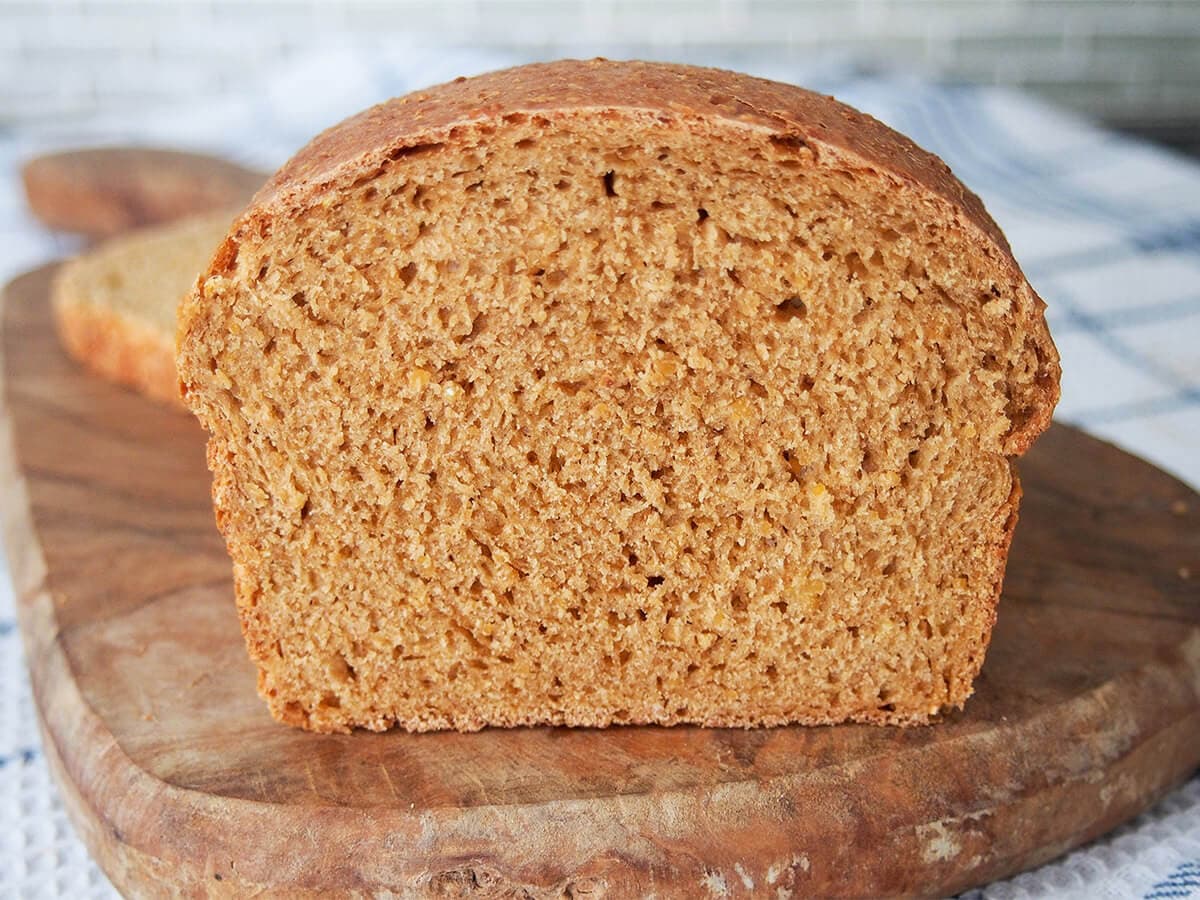
Punch the dough down to release the big gas pockets, turn it onto a lightly floured surface, and shape it into a loaf. Place it in a greased 8x4-inch loaf pan, cover, and let rise until doubled, about 1 hour. Toward the end, preheat your oven to 350 degrees F. This second, shorter rise (the proof) refines the crumb into an even texture instead of a few giant holes.
- 9
Bake low and slow
Bake 35 to 40 minutes until deeply browned. If the top darkens too fast, tent it loosely with foil. Note the 350 degrees F, lower than a lot of breads: all that molasses sugar browns quickly through the Maillard reaction and caramelization, so a gentler oven lets the inside finish before the crust scorches. It's done when the loaf sounds hollow tapped on the bottom, or hits about 195 degrees F inside. Cool on a wire rack at least 15 minutes before slicing, because the crumb is still setting as it cools.
Sign in to see all instructions
Create a free account to unlock this content
Don't have an account? Sign up free
Anadama Bread (Molasses-Cornmeal Loaf with a Science-Backed Soft Crumb)
Created by: TheBreadNerd
Ingredients
- 1 cup water
- 1/4 cup cornmeal
- 1/2 cup molasses
- 2 tbsp butter
- 1/4 oz active dry yeast
- 1 tsp salt
- 2 1/2 cup all-purpose flour
Instructions
- Gelatinize the cornmealIn a small saucepan, bring 1/2 cup of the water and the cornmeal to a boil, then cook and stir until the cornmeal drinks up the water and pulls away from the pan, about 30 seconds. Here's the why: raw cornmeal is basically tiny rocks of starch that will stay gritty in your bread. Heating it with water gelatinizes those starch granules, so they swell, soften, and turn creamy. That gelatinized starch also holds onto a ton of moisture, which is the real secret to why anadama stays soft and sliceable for days.
- Melt in the molasses and butterOff the heat, stir the molasses and butter into the hot cornmeal mush until the butter melts and everything is smooth. Molasses isn't just for that deep brown color and gentle sweetness. It's loaded with simple sugars that give the yeast a fast, easy first meal, and it's hygroscopic (it grabs water from the air), which is another reason this loaf resists going stale.
- Cool it down so you don't murder the yeastLet the cornmeal mixture cool to 110-115 degrees F, roughly warm-bath temperature on your wrist. Do not rush this. Yeast are living organisms, and anything much above 130 degrees F starts killing them off. If the mix still feels hot to the touch, wait. Patience here is the difference between a proper rise and a dense brick.
- Wake up the yeastIn a large bowl, dissolve the yeast in the remaining 1/2 cup water, warmed to 110-115 degrees F. Give it 5 minutes. If it gets foamy and smells faintly of beer, your yeast is alive and hungry and you're good to go. No foam means dead yeast, so start over with a fresh packet rather than wasting your flour.
- Mix the doughAdd the cooled cornmeal mixture, 2 cups of the flour, and the salt to the yeast. Beat until smooth, then stir in just enough of the remaining flour to form a stiff dough. Add flour gradually. You want the dough to come together and pull away from the bowl, but stop while it's still a touch tacky. Extra flour is the number one way people accidentally make dry, heavy bread.
- Knead to build the glutenTurn the dough onto a floured surface and knead 4 to 6 minutes until smooth and elastic. Kneading is you physically aligning and cross-linking the wheat proteins into gluten, the stretchy web that traps the gas the yeast produces. You'll feel it change under your hands: it starts shaggy and sticky, then turns smooth and springs back when you poke it. That bounce-back is your visual cue the gluten network is ready.
- First rise (bulk fermentation)Place the dough in a greased bowl, turning once to coat the top so it doesn't dry out. Cover and let rise in a warm spot until doubled, about 2 hours. This is where the yeast feast on those molasses and flour sugars and burp out carbon dioxide, which the gluten web traps as bubbles. It's a little slower than a plain white loaf because the molasses and cornmeal weigh the dough down, so give it the full time. Poke it: if the dent stays, it's ready.
- Shape and proofPunch the dough down to release the big gas pockets, turn it onto a lightly floured surface, and shape it into a loaf. Place it in a greased 8x4-inch loaf pan, cover, and let rise until doubled, about 1 hour. Toward the end, preheat your oven to 350 degrees F. This second, shorter rise (the proof) refines the crumb into an even texture instead of a few giant holes.
- Bake low and slowBake 35 to 40 minutes until deeply browned. If the top darkens too fast, tent it loosely with foil. Note the 350 degrees F, lower than a lot of breads: all that molasses sugar browns quickly through the Maillard reaction and caramelization, so a gentler oven lets the inside finish before the crust scorches. It's done when the loaf sounds hollow tapped on the bottom, or hits about 195 degrees F inside. Cool on a wire rack at least 15 minutes before slicing, because the crumb is still setting as it cools.