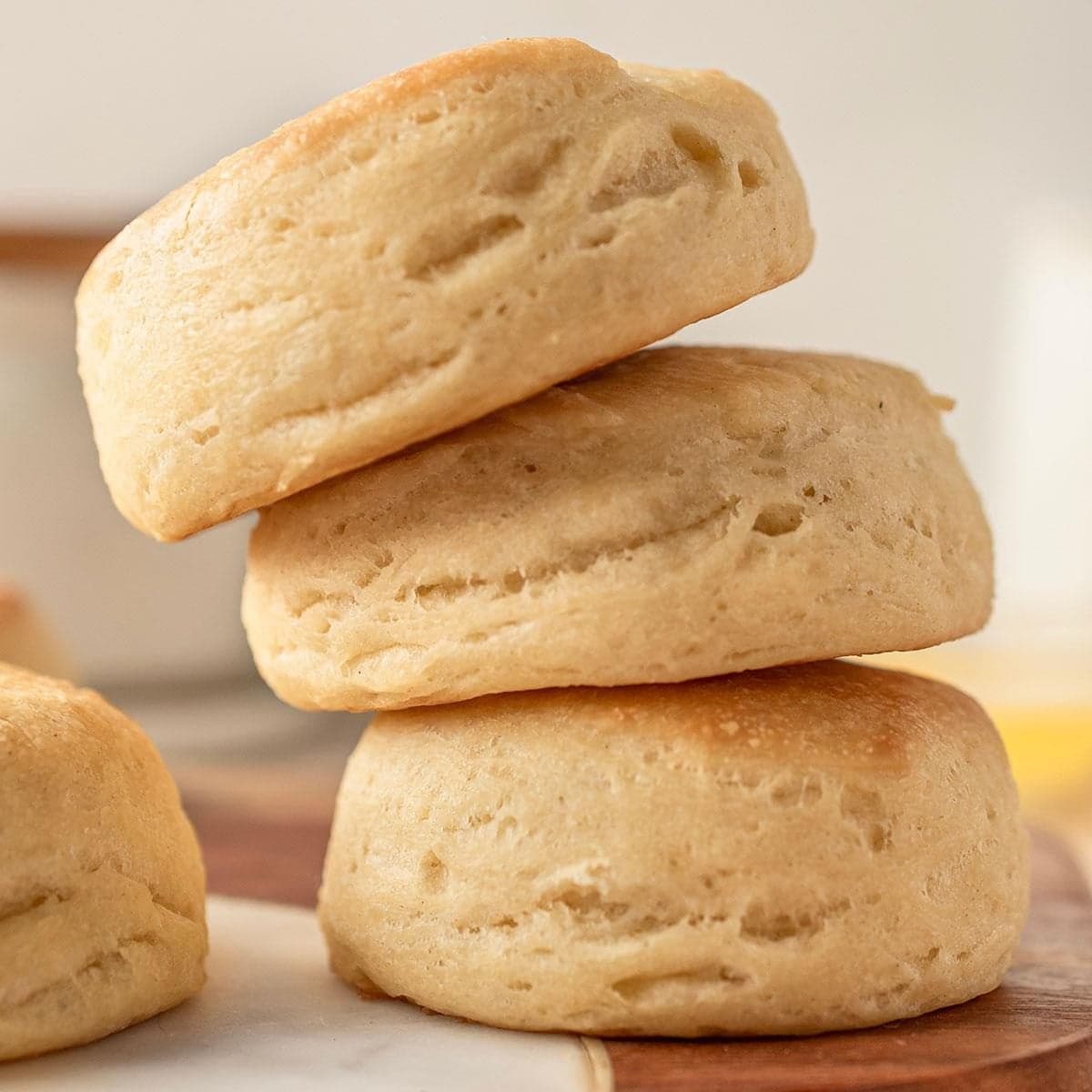
Angel Biscuits (and the Triple-Leavening Trick That Makes Them Foolproof)
Sign in to see ingredients
Create a free account to unlock this content
Don't have an account? Sign up free
Per serving
Calculating nutrition...
- 1
Wake up the yeast
Dissolve the yeast in 1/4 cup warm water (110-115 degrees F) and let it stand for 5 minutes until it looks foamy. That foam is the yeast eating sugar and burping out CO2 - proof it's alive and ready to work. Stir in 2 cups warm buttermilk and set it aside. Keep the liquids in that 110-115 range: too cold and the yeast stays sluggish, too hot (over ~130) and you cook it dead.
- 2
Mix the dry ingredients
In a large bowl, whisk together the flour, sugar, salt, baking powder, and baking soda until evenly combined. Here's the fun part: this dough gets THREE leaveners. Yeast gives slow, flavor-building lift; baking powder fires off CO2 when it hits liquid and again in the oven's heat; baking soda reacts instantly with the acidic buttermilk. That overlapping lift is exactly why these are called 'angel' biscuits - they're almost impossible to get flat and dense.
- 3
Cut in the shortening
Cut 1 cup shortening into the flour mixture with a pastry blender until it looks like coarse crumbs with pea-sized bits. Don't overwork it - those little solid pieces of fat melt in the oven and leave behind pockets of steam, which is what gives biscuits their flaky, tender layers instead of a tight, cakey crumb.
- 4
Bring the dough together
Pour the buttermilk-yeast mixture into the bowl and stir just until a shaggy dough forms. Buttermilk is doing double duty: its acid tenderizes the gluten (for a soft bite) and feeds the baking soda. Use the lower end of the flour range first, 5 cups, and only add more if the dough is too sticky to handle - too much flour is the fastest way to a dry biscuit.
- 5
Knead gently and cut
Turn the dough out onto a lightly floured surface and knead it lightly just 3 or 4 times - only enough to smooth it out. Biscuits want minimal gluten development, so this is the opposite of kneading a sandwich loaf. Roll to a 1/2-inch thickness and cut with a 2-1/2-inch biscuit cutter. Push the cutter straight DOWN without twisting - twisting pinches the cut edges sealed and the biscuits rise lopsided.
- 6
Let them rise
Place the biscuits 2 inches apart on lightly greased baking sheets. Cover with clean kitchen towels and let them rise in a warm spot until almost doubled, about 1 hour. This is where the yeast earns its keep - unlike a baking-powder-only biscuit you bake right away, these get a real proof, which builds extra height and a tender, slightly tangy crumb.
- 7
Bake and butter
Bake at 450 degrees F for 8 to 10 minutes, until the tops are golden brown. That blast of high heat triggers 'oven spring' - the trapped gas expands fast and the baking powder gives one last push before the structure sets. The moment they come out, brush the tops with melted butter for shine and flavor. Serve warm.
Sign in to see all instructions
Create a free account to unlock this content
Don't have an account? Sign up free
Angel Biscuits (and the Triple-Leavening Trick That Makes Them Foolproof)
Created by: TheBreadNerd
Ingredients
- 1/2 oz active dry yeast
- 1/4 cup water
- 2 cup buttermilk
- 5 1/2 cup all-purpose flour
- 1/3 cup sugar
- 2 tsp salt
- 2 tsp baking powder
- 1 tsp baking soda
- 1 cup shortening
- butter
Instructions
- Wake up the yeastDissolve the yeast in 1/4 cup warm water (110-115 degrees F) and let it stand for 5 minutes until it looks foamy. That foam is the yeast eating sugar and burping out CO2 - proof it's alive and ready to work. Stir in 2 cups warm buttermilk and set it aside. Keep the liquids in that 110-115 range: too cold and the yeast stays sluggish, too hot (over ~130) and you cook it dead.
- Mix the dry ingredientsIn a large bowl, whisk together the flour, sugar, salt, baking powder, and baking soda until evenly combined. Here's the fun part: this dough gets THREE leaveners. Yeast gives slow, flavor-building lift; baking powder fires off CO2 when it hits liquid and again in the oven's heat; baking soda reacts instantly with the acidic buttermilk. That overlapping lift is exactly why these are called 'angel' biscuits - they're almost impossible to get flat and dense.
- Cut in the shorteningCut 1 cup shortening into the flour mixture with a pastry blender until it looks like coarse crumbs with pea-sized bits. Don't overwork it - those little solid pieces of fat melt in the oven and leave behind pockets of steam, which is what gives biscuits their flaky, tender layers instead of a tight, cakey crumb.
- Bring the dough togetherPour the buttermilk-yeast mixture into the bowl and stir just until a shaggy dough forms. Buttermilk is doing double duty: its acid tenderizes the gluten (for a soft bite) and feeds the baking soda. Use the lower end of the flour range first, 5 cups, and only add more if the dough is too sticky to handle - too much flour is the fastest way to a dry biscuit.
- Knead gently and cutTurn the dough out onto a lightly floured surface and knead it lightly just 3 or 4 times - only enough to smooth it out. Biscuits want minimal gluten development, so this is the opposite of kneading a sandwich loaf. Roll to a 1/2-inch thickness and cut with a 2-1/2-inch biscuit cutter. Push the cutter straight DOWN without twisting - twisting pinches the cut edges sealed and the biscuits rise lopsided.
- Let them risePlace the biscuits 2 inches apart on lightly greased baking sheets. Cover with clean kitchen towels and let them rise in a warm spot until almost doubled, about 1 hour. This is where the yeast earns its keep - unlike a baking-powder-only biscuit you bake right away, these get a real proof, which builds extra height and a tender, slightly tangy crumb.
- Bake and butterBake at 450 degrees F for 8 to 10 minutes, until the tops are golden brown. That blast of high heat triggers 'oven spring' - the trapped gas expands fast and the baking powder gives one last push before the structure sets. The moment they come out, brush the tops with melted butter for shine and flavor. Serve warm.