Sign in to see ingredients
Create a free account to unlock this content
Don't have an account? Sign up free
Per serving
Calculating nutrition...
- 1
Caramelize the onions
In a large skillet, heat 1/4 cup of the olive oil over medium heat. Add 2 chopped onions and cook, stirring, until soft and golden, 6-8 minutes. This is the Maillard reaction plus a little sugar caramelization doing its thing: the onions' natural sugars brown and turn deep and sweet, which is going to load this dough with flavor you can't get any other way. Set them aside to cool slightly.
- 2
Wake up the yeast
In a large bowl, dissolve 1-1/2 teaspoons active dry yeast in 1/4 cup of the warm water (110-115 degrees F is the sweet spot; hotter than that starts killing yeast, colder and it's sluggish). Add 1/2 teaspoon sugar and let it stand 5 minutes. If it goes foamy and smells bready, your yeast is alive and hungry. That foam is CO2 being released as the yeast eats the sugar.
- 3
Mix and knead the dough
Add 2 tablespoons of the olive oil, 1/2 teaspoon salt, and the remaining 1-1/4 cups warm water to the yeast. Stir in 2 cups of the flour and beat until smooth, then add enough of the remaining flour (up to 3-1/2 cups total) to form a soft dough. Turn onto a floured surface and knead 6-8 minutes until smooth and elastic. Kneading is what aligns and links up the gluten proteins into a stretchy web; that web is what traps gas and gives focaccia its chew. The dough should feel tacky but not sticky and spring back when you poke it.
- 4
First rise
Knead the caramelized onions and 1 tablespoon of the rosemary into the dough for about 1 minute. Place in a greased bowl, turning once to coat the top so it doesn't dry out. Cover and let rise in a warm spot until doubled, about 40 minutes. This first rise is where flavor develops: the yeast is fermenting, producing CO2 that inflates the gluten web and acids that deepen the taste.
- 5
Shape and second rise
Punch the dough down to release the big gas bubbles for a more even crumb, then turn onto a lightly floured surface and divide in half. Pat each piece flat and let rest 5 minutes so the gluten relaxes and stops fighting you. Grease 2 baking sheets and dust with cornmeal (those little pellets act like ball bearings so the bread releases cleanly). Stretch each portion into a 10-inch circle, cover, and let rise again until doubled, about 40 minutes. Meanwhile, heat the oven to 375 degrees F.
- 6
Dimple, top, and bake
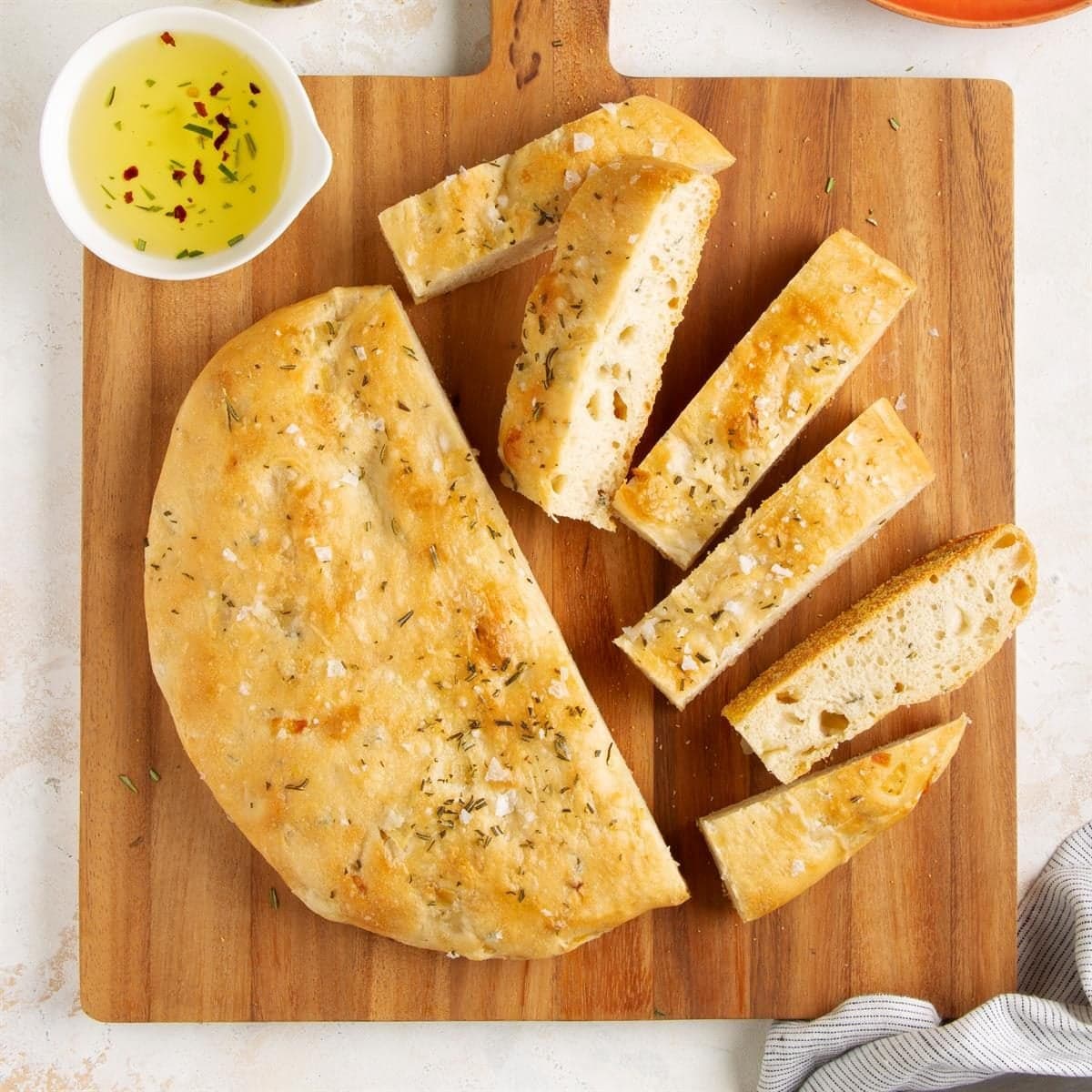
Brush the tops with the remaining 1 tablespoon olive oil and press dimples all over with your fingertips. Those dimples aren't just for looks: they hold pools of oil and keep the crumb from doming, so you get that signature flat, tender interior. Sprinkle with coarse salt and the remaining 1 tablespoon rosemary. Bake 25-30 minutes until golden brown. The oil essentially shallow-fries the bottom crust crisp while the inside stays soft. Cool on wire racks and serve warm.
Sign in to see all instructions
Create a free account to unlock this content
Don't have an account? Sign up free
Caramelized Onion Rosemary Focaccia
Created by: TheBreadNerd
Ingredients
- 7 tbsp olive oil
- 2 onion
- 1 1/2 tsp active dry yeast
- 1 1/2 cup water
- 1/2 tsp sugar
- 1/2 tsp salt
- 3 1/2 cup all-purpose flour
- 2 tbsp fresh rosemary
- cornmeal
- coarse salt
Instructions
- Caramelize the onionsIn a large skillet, heat 1/4 cup of the olive oil over medium heat. Add 2 chopped onions and cook, stirring, until soft and golden, 6-8 minutes. This is the Maillard reaction plus a little sugar caramelization doing its thing: the onions' natural sugars brown and turn deep and sweet, which is going to load this dough with flavor you can't get any other way. Set them aside to cool slightly.
- Wake up the yeastIn a large bowl, dissolve 1-1/2 teaspoons active dry yeast in 1/4 cup of the warm water (110-115 degrees F is the sweet spot; hotter than that starts killing yeast, colder and it's sluggish). Add 1/2 teaspoon sugar and let it stand 5 minutes. If it goes foamy and smells bready, your yeast is alive and hungry. That foam is CO2 being released as the yeast eats the sugar.
- Mix and knead the doughAdd 2 tablespoons of the olive oil, 1/2 teaspoon salt, and the remaining 1-1/4 cups warm water to the yeast. Stir in 2 cups of the flour and beat until smooth, then add enough of the remaining flour (up to 3-1/2 cups total) to form a soft dough. Turn onto a floured surface and knead 6-8 minutes until smooth and elastic. Kneading is what aligns and links up the gluten proteins into a stretchy web; that web is what traps gas and gives focaccia its chew. The dough should feel tacky but not sticky and spring back when you poke it.
- First riseKnead the caramelized onions and 1 tablespoon of the rosemary into the dough for about 1 minute. Place in a greased bowl, turning once to coat the top so it doesn't dry out. Cover and let rise in a warm spot until doubled, about 40 minutes. This first rise is where flavor develops: the yeast is fermenting, producing CO2 that inflates the gluten web and acids that deepen the taste.
- Shape and second risePunch the dough down to release the big gas bubbles for a more even crumb, then turn onto a lightly floured surface and divide in half. Pat each piece flat and let rest 5 minutes so the gluten relaxes and stops fighting you. Grease 2 baking sheets and dust with cornmeal (those little pellets act like ball bearings so the bread releases cleanly). Stretch each portion into a 10-inch circle, cover, and let rise again until doubled, about 40 minutes. Meanwhile, heat the oven to 375 degrees F.
- Dimple, top, and bakeBrush the tops with the remaining 1 tablespoon olive oil and press dimples all over with your fingertips. Those dimples aren't just for looks: they hold pools of oil and keep the crumb from doming, so you get that signature flat, tender interior. Sprinkle with coarse salt and the remaining 1 tablespoon rosemary. Bake 25-30 minutes until golden brown. The oil essentially shallow-fries the bottom crust crisp while the inside stays soft. Cool on wire racks and serve warm.