Classic French Baguettes (and the Steam Science Behind That Shattering Crust)
Sign in to see ingredients
Create a free account to unlock this content
Don't have an account? Sign up free
Per serving
Calculating nutrition...
- 1
Mix and knead
Weigh the bread flour (about 510g), salt, and instant yeast into a stand mixer bowl with the dough hook, keeping the salt and yeast on opposite sides of the bowl so the salt doesn't land directly on the yeast and stun it. Here's why bread flour matters: it has more protein than all-purpose, and more protein means more gluten, which is the stretchy web that traps gas and gives a baguette that chewy, open interior. Pour in 1-1/2 cups warm water heated to 105-110 degrees (warm enough to wake the yeast, not so hot it kills it) and mix on the lowest speed 1-2 minutes until it comes together, then bump to second speed and knead 6-8 minutes. You're done when the dough is smooth, elastic, and pulls cleanly away from the sides of the bowl, which is your visual signal that the gluten is fully developed.
- 2
First rise (bulk ferment)
Grease a 2- to 4-quart container with the olive oil, add the dough, cover with plastic, and let it rise in a warm, draft-free spot about 1 hour until doubled. This is where the real flavor happens: the yeast is eating sugars and burping out carbon dioxide and alcohol, inflating the gluten web and leaving behind the mild tang that makes bread taste like bread instead of just baked flour.
- 3
Divide gently
Dust your work surface lightly with flour and set a floured couche or a large linen towel beside it. Tip the dough out and cut it into four equal oblong pieces with a bench scraper. Do NOT punch it down. Those air bubbles you spent an hour building are exactly what you want to keep, so handle the dough like it's precious.
- 4
Pre-shape and rest
Gently stretch each piece to roughly 8 inches long and 4 inches wide, fold the long edges into the center and seal the seam with the heel of your hand, then fold the top and bottom in to make a little sausage-shaped envelope. Cover with a damp towel and rest 5-10 minutes. This rest isn't idle time, it lets the gluten relax so the dough stops fighting back and will actually stretch into a long baguette without snapping.
- 5
Shape the baguettes
Roll each envelope under your hands into a 12- to 16-inch rod: smooth on top, a touch fatter in the middle, tapering to points at each end. Start in the center and work outward, using gentle pressure to lengthen rather than crush.
- 6
Second rise (proof)
Lay a baguette along the couche, pleat the fabric up into a ridge beside it to hold its shape, set the next baguette against that ridge, and repeat for all four. Cover loosely and proof about 1 hour until doubled. The test: press gently with a fingertip. If it springs back promptly, it's ready. If the dent stays, it needs a few more minutes.
- 7
Heat the oven with a stone and steam pan
Put a baking stone on the middle rack of a COLD oven and set a shallow roasting pan on the rack below it, then preheat to 475 degrees. The stone is a heat battery: it stays blazing hot when the cool dough hits it and drives a fast, powerful oven spring. No stone? A parchment-lined baking sheet works, just give it time to heat.
- 8
Score the tops
Tip the proofed baguettes onto a sheet of parchment (don't lift them by hand or you'll deflate them) and make 4-5 quick slashes down the length of each, about 1/4 inch deep, holding the blade at a 45-degree angle. Scoring isn't decoration: it gives the expanding gas a planned escape route so the loaf bursts open along your cuts instead of blowing out a weak spot on the side.
- 9
Bake with steam
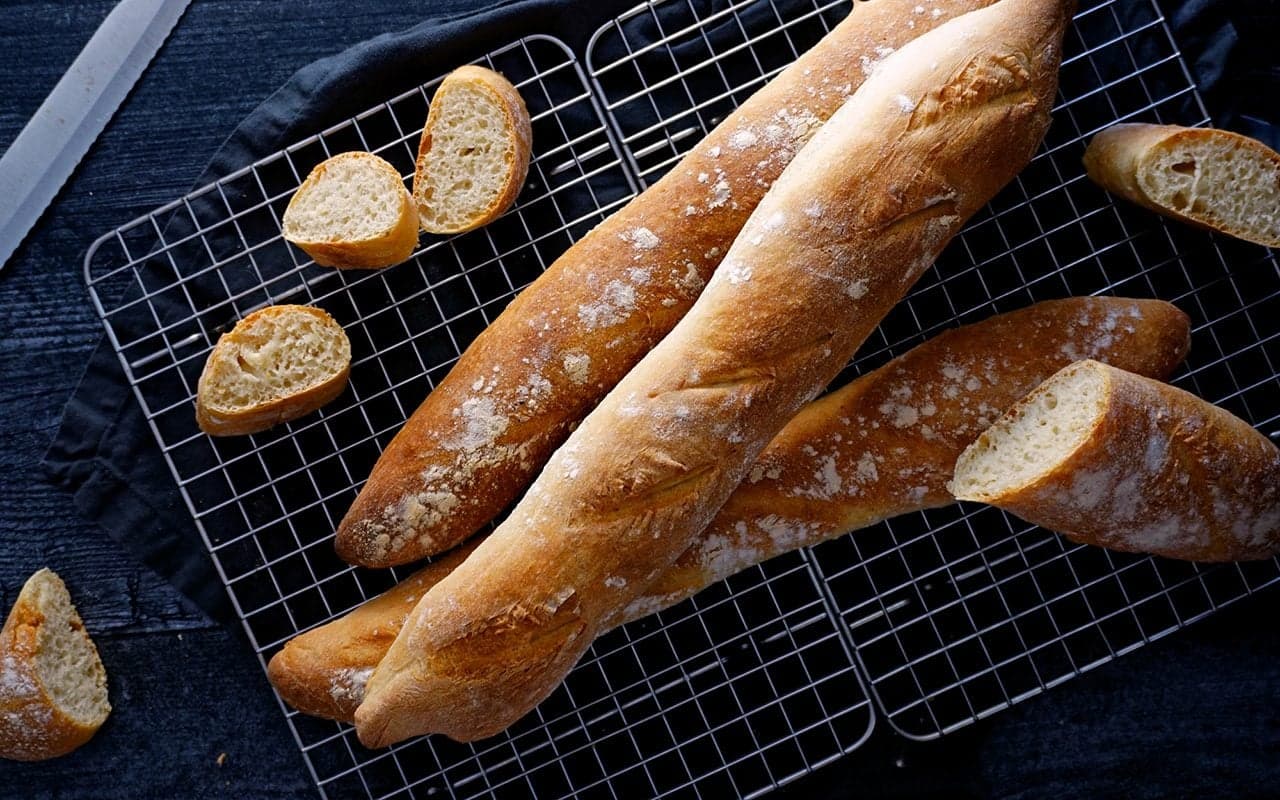
Slide the baguettes and parchment onto the hot stone, then immediately pour water into the roasting pan and shut the door fast to trap the steam. This is the whole secret to a crackly baguette crust: steam keeps the surface soft and stretchy during the first minutes so the loaf can balloon, then it sets into that thin, glassy, shatter-when-you-squeeze shell. Bake 20-25 minutes until deep golden brown and hollow-sounding when you tap the bottom. Cool on a wire rack, and do not skip the steam.
Sign in to see all instructions
Create a free account to unlock this content
Don't have an account? Sign up free
Classic French Baguettes (and the Steam Science Behind That Shattering Crust)
Created by: TheBreadNerd
Ingredients
- 4 1/4 cup bread flour
- 2 tsp salt
- 2 1/2 tsp instant yeast
- 1 1/2 cup warm water
- 1 tbsp olive oil
Instructions
- Mix and kneadWeigh the bread flour (about 510g), salt, and instant yeast into a stand mixer bowl with the dough hook, keeping the salt and yeast on opposite sides of the bowl so the salt doesn't land directly on the yeast and stun it. Here's why bread flour matters: it has more protein than all-purpose, and more protein means more gluten, which is the stretchy web that traps gas and gives a baguette that chewy, open interior. Pour in 1-1/2 cups warm water heated to 105-110 degrees (warm enough to wake the yeast, not so hot it kills it) and mix on the lowest speed 1-2 minutes until it comes together, then bump to second speed and knead 6-8 minutes. You're done when the dough is smooth, elastic, and pulls cleanly away from the sides of the bowl, which is your visual signal that the gluten is fully developed.
- First rise (bulk ferment)Grease a 2- to 4-quart container with the olive oil, add the dough, cover with plastic, and let it rise in a warm, draft-free spot about 1 hour until doubled. This is where the real flavor happens: the yeast is eating sugars and burping out carbon dioxide and alcohol, inflating the gluten web and leaving behind the mild tang that makes bread taste like bread instead of just baked flour.
- Divide gentlyDust your work surface lightly with flour and set a floured couche or a large linen towel beside it. Tip the dough out and cut it into four equal oblong pieces with a bench scraper. Do NOT punch it down. Those air bubbles you spent an hour building are exactly what you want to keep, so handle the dough like it's precious.
- Pre-shape and restGently stretch each piece to roughly 8 inches long and 4 inches wide, fold the long edges into the center and seal the seam with the heel of your hand, then fold the top and bottom in to make a little sausage-shaped envelope. Cover with a damp towel and rest 5-10 minutes. This rest isn't idle time, it lets the gluten relax so the dough stops fighting back and will actually stretch into a long baguette without snapping.
- Shape the baguettesRoll each envelope under your hands into a 12- to 16-inch rod: smooth on top, a touch fatter in the middle, tapering to points at each end. Start in the center and work outward, using gentle pressure to lengthen rather than crush.
- Second rise (proof)Lay a baguette along the couche, pleat the fabric up into a ridge beside it to hold its shape, set the next baguette against that ridge, and repeat for all four. Cover loosely and proof about 1 hour until doubled. The test: press gently with a fingertip. If it springs back promptly, it's ready. If the dent stays, it needs a few more minutes.
- Heat the oven with a stone and steam panPut a baking stone on the middle rack of a COLD oven and set a shallow roasting pan on the rack below it, then preheat to 475 degrees. The stone is a heat battery: it stays blazing hot when the cool dough hits it and drives a fast, powerful oven spring. No stone? A parchment-lined baking sheet works, just give it time to heat.
- Score the topsTip the proofed baguettes onto a sheet of parchment (don't lift them by hand or you'll deflate them) and make 4-5 quick slashes down the length of each, about 1/4 inch deep, holding the blade at a 45-degree angle. Scoring isn't decoration: it gives the expanding gas a planned escape route so the loaf bursts open along your cuts instead of blowing out a weak spot on the side.
- Bake with steamSlide the baguettes and parchment onto the hot stone, then immediately pour water into the roasting pan and shut the door fast to trap the steam. This is the whole secret to a crackly baguette crust: steam keeps the surface soft and stretchy during the first minutes so the loaf can balloon, then it sets into that thin, glassy, shatter-when-you-squeeze shell. Bake 20-25 minutes until deep golden brown and hollow-sounding when you tap the bottom. Cool on a wire rack, and do not skip the steam.