Sign in to see ingredients
Create a free account to unlock this content
Don't have an account? Sign up free
Per serving
Calculating nutrition...
- 1
Preheat and mix the dry ingredients
Heat your oven to 375F. In a large bowl, whisk together the flour, sugar, salt, baking powder, and baking soda. Here's the whole trick of soda bread: there's no yeast. Your lift comes from an acid-base reaction. The baking soda (a base) is just sitting here waiting to meet the acidic buttermilk, and the second they touch, they'll start producing carbon dioxide. The baking powder is a little insurance policy that gives you a second burst of gas in the oven's heat.
- 2
Cut in the cold butter
Add the cold, cubed butter and cut it into the flour with a pastry cutter or your fingertips until the mixture looks like coarse crumbs with pea-sized bits of butter throughout. Keep it cold. Those little pockets of solid butter melt in the oven and leave behind tiny steam pockets, which is what keeps a quick bread tender instead of dense.
- 3
Combine wet and dry
In a separate bowl, whisk the buttermilk and egg together, then pour into the dry ingredients and stir just until everything is moistened. Stop the moment there are no dry patches. This is the most important sentence in the recipe: the less you stir, the less gluten you develop, and you WANT weak gluten here. Overmixed soda bread turns tough and rubbery. Fold in the raisins and caraway seeds.
- 4
Knead gently and shape
Turn the shaggy dough onto a floured surface and knead gently just 8 to 10 times, only enough to pull it into a cohesive ball. It should feel soft and a little craggy, not smooth like a yeast dough. Place it on a greased baking pan and pat into a 7-inch round loaf.
- 5
Score the cross and glaze
Cut a 4-inch cross about 1/4 inch deep across the top and brush the whole loaf with the milk. That cross isn't just tradition, it's function: it opens up the tight crust so the loaf can expand as gas builds, instead of cracking wherever it wants. The milk wash helps the top brown into a deep golden color.
- 6
Bake
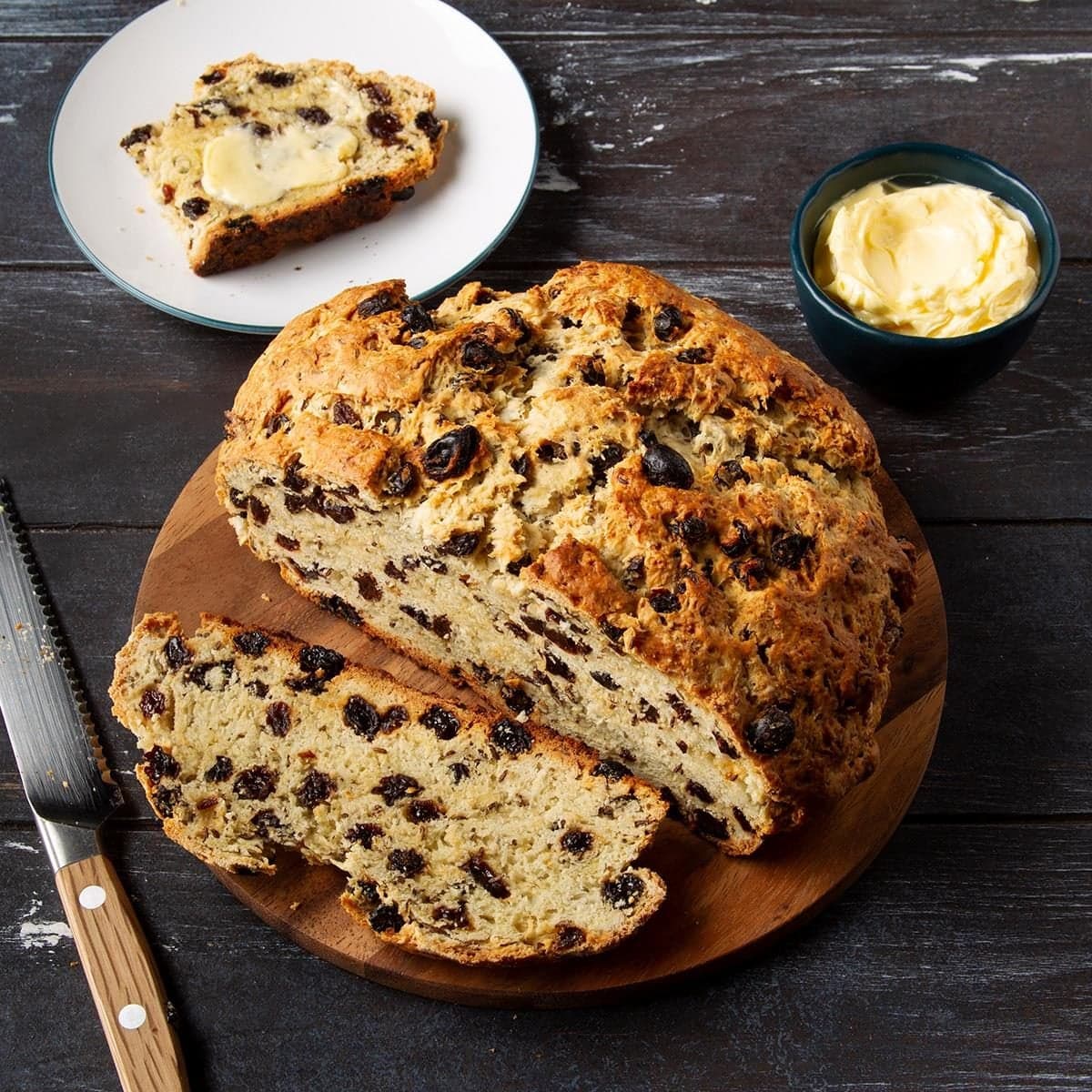
Bake for about 1 hour, until the loaf is deep golden brown and sounds hollow when you tap the bottom. Move it to a wire rack to cool. Let it rest at least 15 minutes before slicing so the crumb can set, otherwise it'll gum up under the knife.
Sign in to see all instructions
Create a free account to unlock this content
Don't have an account? Sign up free
Classic Irish Soda Bread (No Yeast, All Chemistry)
Created by: TheBreadNerd
Ingredients
- 4 cup all-purpose flour
- 1/4 cup sugar
- 1 tsp salt
- 1 tsp baking powder
- 1 tsp baking soda
- 1/4 cup butter
- 1 1/3 cup buttermilk
- 1 egg
- 2 cup raisins
- 3 tbsp caraway seeds
- 2 tbsp milk
Instructions
- Preheat and mix the dry ingredientsHeat your oven to 375F. In a large bowl, whisk together the flour, sugar, salt, baking powder, and baking soda. Here's the whole trick of soda bread: there's no yeast. Your lift comes from an acid-base reaction. The baking soda (a base) is just sitting here waiting to meet the acidic buttermilk, and the second they touch, they'll start producing carbon dioxide. The baking powder is a little insurance policy that gives you a second burst of gas in the oven's heat.
- Cut in the cold butterAdd the cold, cubed butter and cut it into the flour with a pastry cutter or your fingertips until the mixture looks like coarse crumbs with pea-sized bits of butter throughout. Keep it cold. Those little pockets of solid butter melt in the oven and leave behind tiny steam pockets, which is what keeps a quick bread tender instead of dense.
- Combine wet and dryIn a separate bowl, whisk the buttermilk and egg together, then pour into the dry ingredients and stir just until everything is moistened. Stop the moment there are no dry patches. This is the most important sentence in the recipe: the less you stir, the less gluten you develop, and you WANT weak gluten here. Overmixed soda bread turns tough and rubbery. Fold in the raisins and caraway seeds.
- Knead gently and shapeTurn the shaggy dough onto a floured surface and knead gently just 8 to 10 times, only enough to pull it into a cohesive ball. It should feel soft and a little craggy, not smooth like a yeast dough. Place it on a greased baking pan and pat into a 7-inch round loaf.
- Score the cross and glazeCut a 4-inch cross about 1/4 inch deep across the top and brush the whole loaf with the milk. That cross isn't just tradition, it's function: it opens up the tight crust so the loaf can expand as gas builds, instead of cracking wherever it wants. The milk wash helps the top brown into a deep golden color.
- BakeBake for about 1 hour, until the loaf is deep golden brown and sounds hollow when you tap the bottom. Move it to a wire rack to cool. Let it rest at least 15 minutes before slicing so the crumb can set, otherwise it'll gum up under the knife.