Crusty French Bread (and the Ice-Cube Steam Trick That Makes the Crust Crackle)
Sign in to see ingredients
Create a free account to unlock this content
Don't have an account? Sign up free
Per serving
Calculating nutrition...
- 1
Wake up the yeast
In a large bowl, dissolve the yeast in 2 cups warm water (110-115F). That temperature window matters: too cold and the yeast stays sluggish, too hot (above ~130F) and you cook it. Aim for bathwater-warm. Give it a few minutes and you should see it get a little foamy, which is your proof the yeast is alive and hungry.
- 2
Build the dough
Add the salt, sugar, and 2 cups of the bread flour. Beat until smooth. Here's the why: bread flour has more protein (around 12-13%) than all-purpose, which means more gluten, which means the chewy, structured crumb a good French loaf needs. Stir in enough of the remaining flour to form a soft dough that just pulls together.
- 3
Knead to develop gluten
Turn the dough onto a floured surface and knead 6-8 minutes until smooth and elastic. You're not just mixing here, you're organizing the tangled gluten proteins into long, aligned strands. The visual cue: the dough goes from shaggy and rough to smooth and springy, and when you poke it, it slowly pushes back. That bounce is the gluten network doing its job.
- 4
First rise
Place the dough in a greased bowl, turning once to coat the top so it doesn't dry out. Cover and let rise in a warm spot until doubled, about 1 hour. During this bulk rise the yeast is feeding on the flour's sugars and burping out CO2, and the gluten traps those bubbles. That trapped gas is literally what makes bread rise.
- 5
Shape the loaves
Punch the dough down to release the big gas pockets, then turn it onto a lightly floured surface and divide in half. Shape each piece into a 12-inch-long loaf, rolling it up tightly to build surface tension. A taut skin on the outside is what gives the loaf its structure and helps it hold a nice domed shape instead of spreading flat.
- 6
Second rise
Place the loaves seam side down on a greased baking sheet. Cover and let rise until doubled, about 30 minutes. This second, shorter proof lets the shaped loaves puff back up and relax the gluten so they can expand freely in the oven. Don't rush it: underproofed dough tears and splits, overproofed dough collapses. Doubled and jiggly-soft is the sweet spot.
- 7
Score and steam-bake
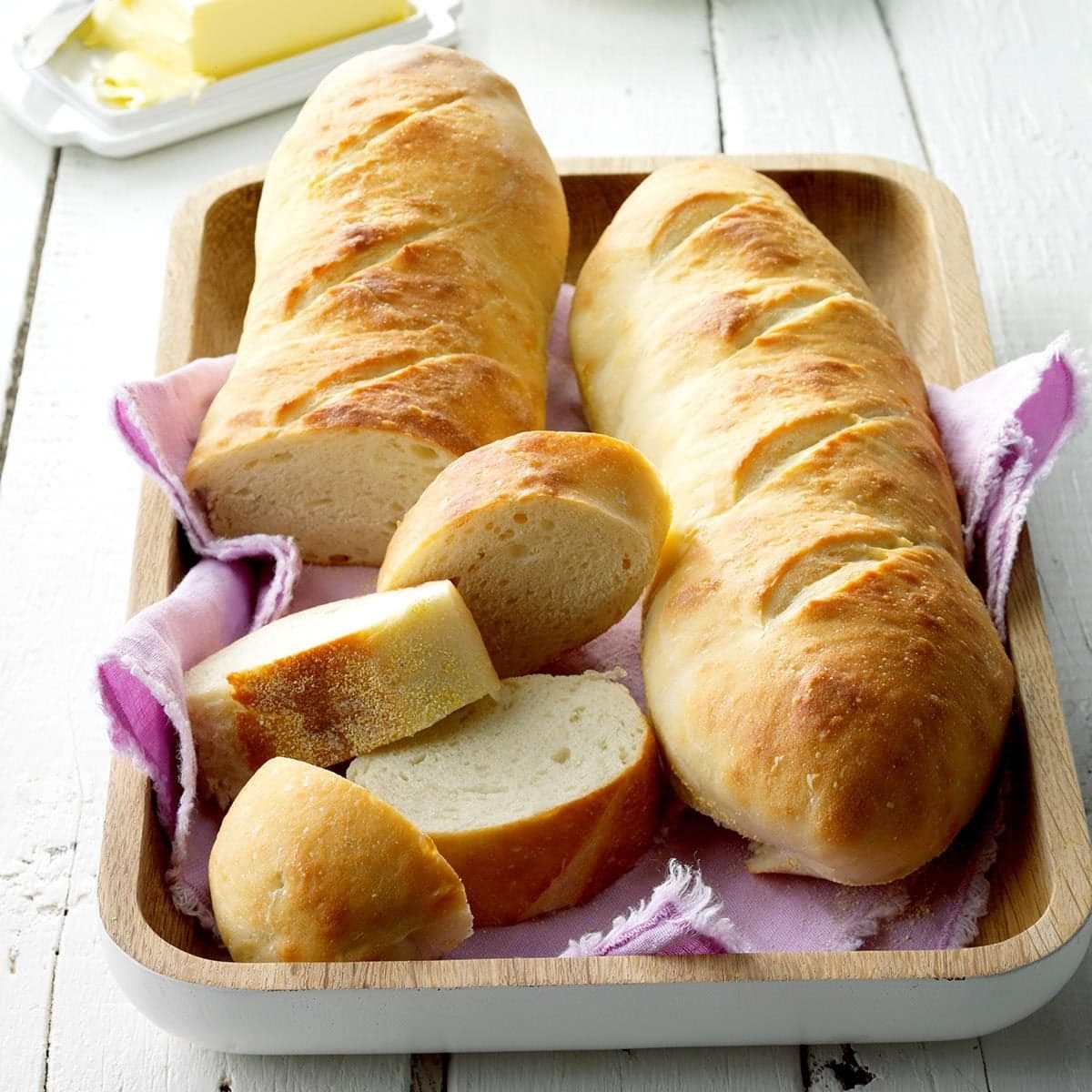
Preheat the oven to 450F. Sprinkle the loaves with the cornmeal and make 4 shallow diagonal slashes across the top of each with a very thin, sharp knife or a lame. Those cuts aren't just decoration, they give the rapidly expanding gases a controlled place to escape so the loaf springs up instead of bursting at a random weak spot. Slide the loaves in, then toss 3-4 ice cubes onto the bottom of the oven and shut the door fast. The ice flashes to steam, and that burst of moisture keeps the crust soft just long enough for the bread to fully expand before it sets, then dries into that shattery, crackly crust. Bake 15-20 minutes until deep golden brown, and cool on a wire rack.
Sign in to see all instructions
Create a free account to unlock this content
Don't have an account? Sign up free
Crusty French Bread (and the Ice-Cube Steam Trick That Makes the Crust Crackle)
Created by: TheBreadNerd
Ingredients
- 2 tbsp active dry yeast
- 2 cup water
- 2 tsp salt
- 1 tsp sugar
- 5 cup bread flour
- 1 tsp cornmeal
Instructions
- Wake up the yeastIn a large bowl, dissolve the yeast in 2 cups warm water (110-115F). That temperature window matters: too cold and the yeast stays sluggish, too hot (above ~130F) and you cook it. Aim for bathwater-warm. Give it a few minutes and you should see it get a little foamy, which is your proof the yeast is alive and hungry.
- Build the doughAdd the salt, sugar, and 2 cups of the bread flour. Beat until smooth. Here's the why: bread flour has more protein (around 12-13%) than all-purpose, which means more gluten, which means the chewy, structured crumb a good French loaf needs. Stir in enough of the remaining flour to form a soft dough that just pulls together.
- Knead to develop glutenTurn the dough onto a floured surface and knead 6-8 minutes until smooth and elastic. You're not just mixing here, you're organizing the tangled gluten proteins into long, aligned strands. The visual cue: the dough goes from shaggy and rough to smooth and springy, and when you poke it, it slowly pushes back. That bounce is the gluten network doing its job.
- First risePlace the dough in a greased bowl, turning once to coat the top so it doesn't dry out. Cover and let rise in a warm spot until doubled, about 1 hour. During this bulk rise the yeast is feeding on the flour's sugars and burping out CO2, and the gluten traps those bubbles. That trapped gas is literally what makes bread rise.
- Shape the loavesPunch the dough down to release the big gas pockets, then turn it onto a lightly floured surface and divide in half. Shape each piece into a 12-inch-long loaf, rolling it up tightly to build surface tension. A taut skin on the outside is what gives the loaf its structure and helps it hold a nice domed shape instead of spreading flat.
- Second risePlace the loaves seam side down on a greased baking sheet. Cover and let rise until doubled, about 30 minutes. This second, shorter proof lets the shaped loaves puff back up and relax the gluten so they can expand freely in the oven. Don't rush it: underproofed dough tears and splits, overproofed dough collapses. Doubled and jiggly-soft is the sweet spot.
- Score and steam-bakePreheat the oven to 450F. Sprinkle the loaves with the cornmeal and make 4 shallow diagonal slashes across the top of each with a very thin, sharp knife or a lame. Those cuts aren't just decoration, they give the rapidly expanding gases a controlled place to escape so the loaf springs up instead of bursting at a random weak spot. Slide the loaves in, then toss 3-4 ice cubes onto the bottom of the oven and shut the door fast. The ice flashes to steam, and that burst of moisture keeps the crust soft just long enough for the bread to fully expand before it sets, then dries into that shattery, crackly crust. Bake 15-20 minutes until deep golden brown, and cool on a wire rack.