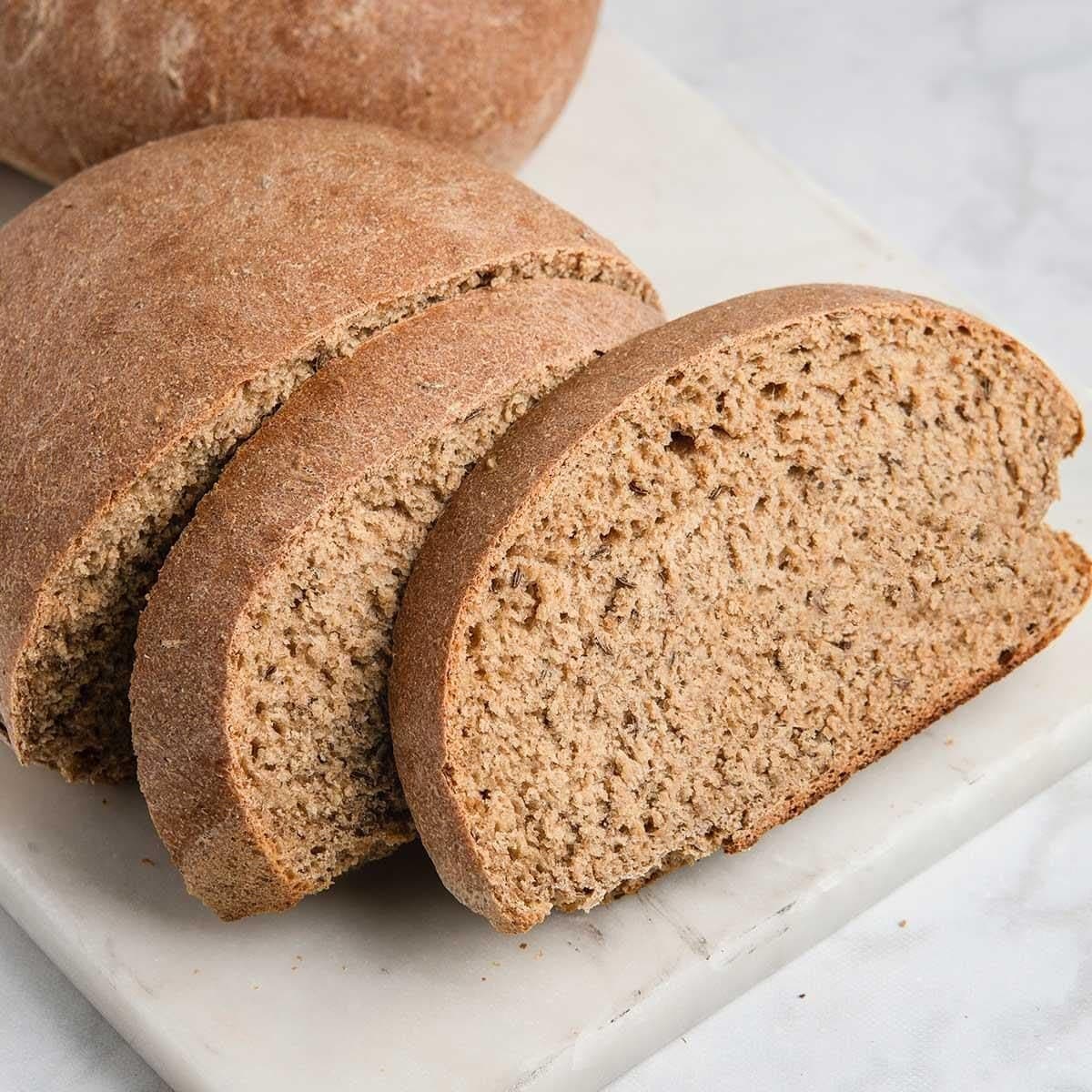
Deli-Style Caraway Rye Bread (and the Pentosan Science Behind That Chew)
Sign in to see ingredients
Create a free account to unlock this content
Don't have an account? Sign up free
Per serving
Calculating nutrition...
- 1
Wake up the yeast
In a large bowl, dissolve the yeast in 1/4 cup of the warm water (110-115 degrees F, so warm like a baby bottle, not hot enough to kill the little guys). Let it sit a few minutes until it looks foamy and smells bready. That foam is CO2 bubbling out, your proof the yeast is alive and hungry. Stir in the brown sugar, molasses, caraway seeds, oil, salt, and the remaining 1-1/2 cups warm water.
- 2
Build the dough
Add the rye flour, whole wheat flour, and 1 cup of the all-purpose flour. Beat on medium speed until smooth. Here is the nerdy part: rye flour is low in the gluten-forming proteins that make wheat dough stretchy. Instead it is packed with pentosans, sticky carbohydrate gums that soak up huge amounts of water and give rye its signature dense, moist chew. That is exactly why we blend in wheat flours, to lend the structure rye can't build on its own. Stir in enough of the remaining all-purpose flour (about 1-1/2 to 2 more cups) to form a firm dough.
- 3
Knead it smooth
Turn the dough out onto a floured surface and knead until smooth and elastic, 6 to 8 minutes. Rye dough feels noticeably tackier and stickier than a plain white dough. That is the pentosans clinging to water, and it is completely normal, so resist the urge to bury it in extra flour. You want it tacky but not gluing itself to your hands. Kneading is what lines up the wheat gluten strands into the stretchy net that will trap gas later.
- 4
First rise
Place the dough in a greased bowl, turning it once so the top gets a light coat of oil (this keeps the surface from drying into a skin). Cover and let it rise in a warm spot until doubled, about 1-1/2 hours. Underneath, the yeast is feasting on the sugars and molasses and burping out CO2, while the gluten net stretches to trap all those bubbles and inflate the dough.
- 5
Shape the loaves
Punch the dough down to release the big gas pockets, then turn it out and divide in half. Shape each piece into a tight round loaf, pulling the surface taut as you go. That surface tension is what makes the loaf hold a proud dome instead of spreading into a sad puddle. Set the loaves on a baking sheet coated with cooking spray. For the classic deli look, brush the tops with an egg white beaten with a splash of water and shower on a little more caraway.
- 6
Second rise and preheat
Cover the loaves with kitchen towels and let them rise in a warm place until almost doubled, about 1-1/2 hours. Meanwhile, preheat the oven to 350 degrees F. To check if they are ready, poke a loaf gently: the dent should spring back slowly and leave a slight indent. Spring back fast and it needs more time; stay fully dented and it is overproofed.
- 7
Bake and cool
Bake until deep golden brown, 30 to 35 minutes. The real doneness test is sound, not color: tap the bottom of a loaf and listen for a hollow thump, which means the interior has set and driven off enough moisture. Move the loaves to a wire rack and let them cool before slicing. I know it is torture, but cutting into a hot loaf lets the still-setting crumb release its steam and turn gummy, so patience here is the difference between deli-worthy and doughy.
Sign in to see all instructions
Create a free account to unlock this content
Don't have an account? Sign up free
Deli-Style Caraway Rye Bread (and the Pentosan Science Behind That Chew)
Created by: TheBreadNerd
Ingredients
- 1/4 oz active dry yeast
- 1 3/4 cup water
- 1/4 cup brown sugar
- 1/4 cup molasses
- 3 tbsp caraway seeds
- 2 tbsp canola oil
- 1 tbsp salt
- 1 3/4 cup rye flour
- 3/4 cup whole wheat flour
- 3 cup all-purpose flour
Instructions
- Wake up the yeastIn a large bowl, dissolve the yeast in 1/4 cup of the warm water (110-115 degrees F, so warm like a baby bottle, not hot enough to kill the little guys). Let it sit a few minutes until it looks foamy and smells bready. That foam is CO2 bubbling out, your proof the yeast is alive and hungry. Stir in the brown sugar, molasses, caraway seeds, oil, salt, and the remaining 1-1/2 cups warm water.
- Build the doughAdd the rye flour, whole wheat flour, and 1 cup of the all-purpose flour. Beat on medium speed until smooth. Here is the nerdy part: rye flour is low in the gluten-forming proteins that make wheat dough stretchy. Instead it is packed with pentosans, sticky carbohydrate gums that soak up huge amounts of water and give rye its signature dense, moist chew. That is exactly why we blend in wheat flours, to lend the structure rye can't build on its own. Stir in enough of the remaining all-purpose flour (about 1-1/2 to 2 more cups) to form a firm dough.
- Knead it smoothTurn the dough out onto a floured surface and knead until smooth and elastic, 6 to 8 minutes. Rye dough feels noticeably tackier and stickier than a plain white dough. That is the pentosans clinging to water, and it is completely normal, so resist the urge to bury it in extra flour. You want it tacky but not gluing itself to your hands. Kneading is what lines up the wheat gluten strands into the stretchy net that will trap gas later.
- First risePlace the dough in a greased bowl, turning it once so the top gets a light coat of oil (this keeps the surface from drying into a skin). Cover and let it rise in a warm spot until doubled, about 1-1/2 hours. Underneath, the yeast is feasting on the sugars and molasses and burping out CO2, while the gluten net stretches to trap all those bubbles and inflate the dough.
- Shape the loavesPunch the dough down to release the big gas pockets, then turn it out and divide in half. Shape each piece into a tight round loaf, pulling the surface taut as you go. That surface tension is what makes the loaf hold a proud dome instead of spreading into a sad puddle. Set the loaves on a baking sheet coated with cooking spray. For the classic deli look, brush the tops with an egg white beaten with a splash of water and shower on a little more caraway.
- Second rise and preheatCover the loaves with kitchen towels and let them rise in a warm place until almost doubled, about 1-1/2 hours. Meanwhile, preheat the oven to 350 degrees F. To check if they are ready, poke a loaf gently: the dent should spring back slowly and leave a slight indent. Spring back fast and it needs more time; stay fully dented and it is overproofed.
- Bake and coolBake until deep golden brown, 30 to 35 minutes. The real doneness test is sound, not color: tap the bottom of a loaf and listen for a hollow thump, which means the interior has set and driven off enough moisture. Move the loaves to a wire rack and let them cool before slicing. I know it is torture, but cutting into a hot loaf lets the still-setting crumb release its steam and turn gummy, so patience here is the difference between deli-worthy and doughy.