English Muffin Bread (and the No-Knead Trick Behind All Those Nooks and Crannies)
Sign in to see ingredients
Create a free account to unlock this content
Don't have an account? Sign up free
Per serving
Calculating nutrition...
- 1
Wake the yeast and beat the batter
In a large bowl, whisk together 2 cups of the flour with the yeast, sugar, salt, and baking soda. Warm the milk and water to 120-130F (hotter than lukewarm, but nowhere near boiling) and pour them in. Here's why that temperature matters: active dry yeast is happiest and fastest in that 120-130F window when it's mixed straight into dry flour, and the warmth gets the little fungi feeding right away. Beat on low for 30 seconds to bring it together, then crank it to high for a full 3 minutes. That hard beating is doing your gluten development for you, so pay attention now because we're about to stop early on purpose.
- 2
Stir in the rest of the flour and DON'T knead it
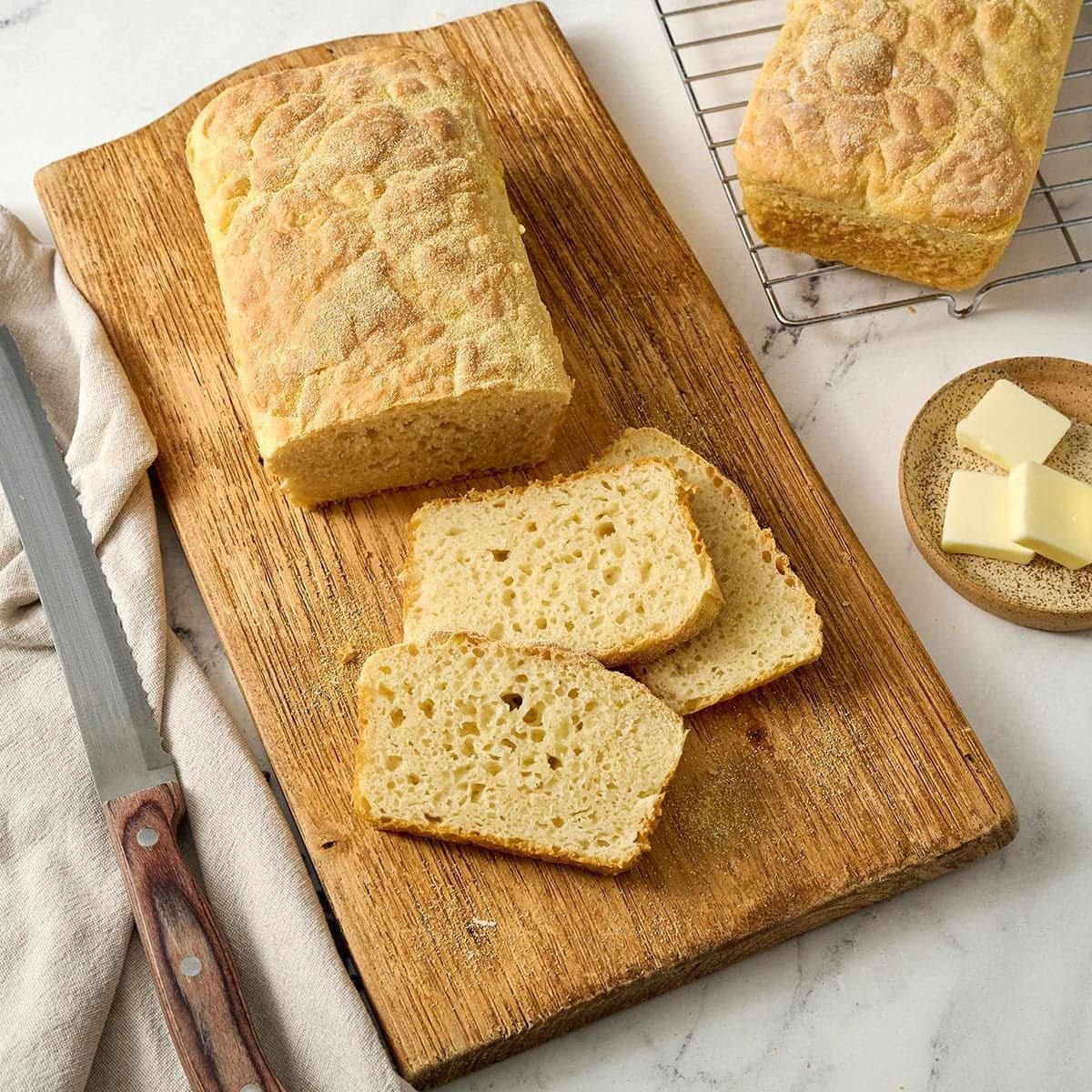
Stir in the remaining 3 cups of flour with a wooden spoon until you have a stiff, shaggy batter, then walk away from it. Do not knead. This is the whole secret to the craggy crumb: kneading lines up gluten strands into a tight, elastic web that traps small, even bubbles (great for a sandwich loaf, wrong for this). By leaving the dough slack and under-developed, you let the gas form big, irregular pockets instead. Those are the nooks and crannies, and they're where melted butter goes to live. The pinch of baking soda is your insurance policy: it reacts with the slight acidity of the batter to throw off extra CO2 and open the crumb up even more.
- 3
Pan it, dust with cornmeal, and let it rise
Grease two 8x4-inch loaf pans and sprinkle the insides with cornmeal, then spoon the batter in evenly and dust the tops with more cornmeal. The cornmeal isn't just for looks, it gives you that gritty, toasty English-muffin exterior and keeps the loaf from sticking. Cover and let rise in a warm, draft-free spot until doubled, about 45 minutes. Don't chase the clock, chase the look: the batter should crest right up near the rim of the pan and jiggle like it's full of air. That's the yeast having done its job.
- 4
Bake, then get it out of the pan fast
Bake at 375F until the tops are a deep, even golden brown, about 35 minutes. If you tap the loaf it should sound hollow, meaning the interior has set and dried enough to hold its structure. Turn the loaves out of the pans immediately and cool them on a wire rack, because if they sit in the hot pan they'll steam against the sides and go gummy. Cool, then slice thick and toast, and watch butter or jam pool into every last crater.
Sign in to see all instructions
Create a free account to unlock this content
Don't have an account? Sign up free
English Muffin Bread (and the No-Knead Trick Behind All Those Nooks and Crannies)
Created by: TheBreadNerd
Ingredients
- 5 cup all-purpose flour
- 1/2 oz active dry yeast
- 1 tbsp sugar
- 2 tsp salt
- 1/4 tsp baking soda
- 2 cup whole milk
- 1/2 cup water
- cornmeal
Instructions
- Wake the yeast and beat the batterIn a large bowl, whisk together 2 cups of the flour with the yeast, sugar, salt, and baking soda. Warm the milk and water to 120-130F (hotter than lukewarm, but nowhere near boiling) and pour them in. Here's why that temperature matters: active dry yeast is happiest and fastest in that 120-130F window when it's mixed straight into dry flour, and the warmth gets the little fungi feeding right away. Beat on low for 30 seconds to bring it together, then crank it to high for a full 3 minutes. That hard beating is doing your gluten development for you, so pay attention now because we're about to stop early on purpose.
- Stir in the rest of the flour and DON'T knead itStir in the remaining 3 cups of flour with a wooden spoon until you have a stiff, shaggy batter, then walk away from it. Do not knead. This is the whole secret to the craggy crumb: kneading lines up gluten strands into a tight, elastic web that traps small, even bubbles (great for a sandwich loaf, wrong for this). By leaving the dough slack and under-developed, you let the gas form big, irregular pockets instead. Those are the nooks and crannies, and they're where melted butter goes to live. The pinch of baking soda is your insurance policy: it reacts with the slight acidity of the batter to throw off extra CO2 and open the crumb up even more.
- Pan it, dust with cornmeal, and let it riseGrease two 8x4-inch loaf pans and sprinkle the insides with cornmeal, then spoon the batter in evenly and dust the tops with more cornmeal. The cornmeal isn't just for looks, it gives you that gritty, toasty English-muffin exterior and keeps the loaf from sticking. Cover and let rise in a warm, draft-free spot until doubled, about 45 minutes. Don't chase the clock, chase the look: the batter should crest right up near the rim of the pan and jiggle like it's full of air. That's the yeast having done its job.
- Bake, then get it out of the pan fastBake at 375F until the tops are a deep, even golden brown, about 35 minutes. If you tap the loaf it should sound hollow, meaning the interior has set and dried enough to hold its structure. Turn the loaves out of the pans immediately and cool them on a wire rack, because if they sit in the hot pan they'll steam against the sides and go gummy. Cool, then slice thick and toast, and watch butter or jam pool into every last crater.