Homemade Pita Bread (and the Steam-Pocket Science That Makes Them Puff)
Sign in to see ingredients
Create a free account to unlock this content
Don't have an account? Sign up free
Per serving
Calculating nutrition...
- 1
Wake up the yeast
In a large bowl, dissolve the yeast in the warm water. Your water should sit right at 110-115F: warm enough to rouse the yeast, cool enough not to cook it. If it steams or feels hot on your wrist, let it cool. Give it a few minutes until it looks a little cloudy and smells faintly of bread.
- 2
Mix the dough
Stir in the salt, then add flour a bit at a time until you have a soft dough. Here's the thing about salt: it isn't just for flavor. It tightens up the gluten network so the dough rolls out without tearing, and it slows fermentation so the pitas don't over-proof. Add just enough flour that the dough pulls together but still feels a touch tacky.
- 3
Knead to build gluten
Turn the dough onto a floured surface and knead 6-8 minutes until it's smooth and elastic. You're organizing tangled gluten strands into a stretchy, elastic web, and that web is exactly what will trap steam later. When the dough springs back when poked and feels tacky but not sticky, you're there. Do NOT let it rise yet: this is a rest-later dough.
- 4
Divide and roll thin
Cut the dough into 6 pieces. Working one at a time (keep the rest under a towel so they don't dry out and crust over), knead each piece for 1 minute, then roll it into a 5-inch circle. Roll it evenly and thin, and try not to tear it: a hole is an escape hatch for steam, and a pita that leaks steam won't puff.
- 5
Let the circles rise
Cover the circles and let them rise in a warm spot until doubled, about 45 minutes. Meanwhile, crank your oven to 500F and let it fully preheat. The high heat is non-negotiable here, so give it the full preheat, and use an oven thermometer if you have one.
- 6
Bake and watch them balloon
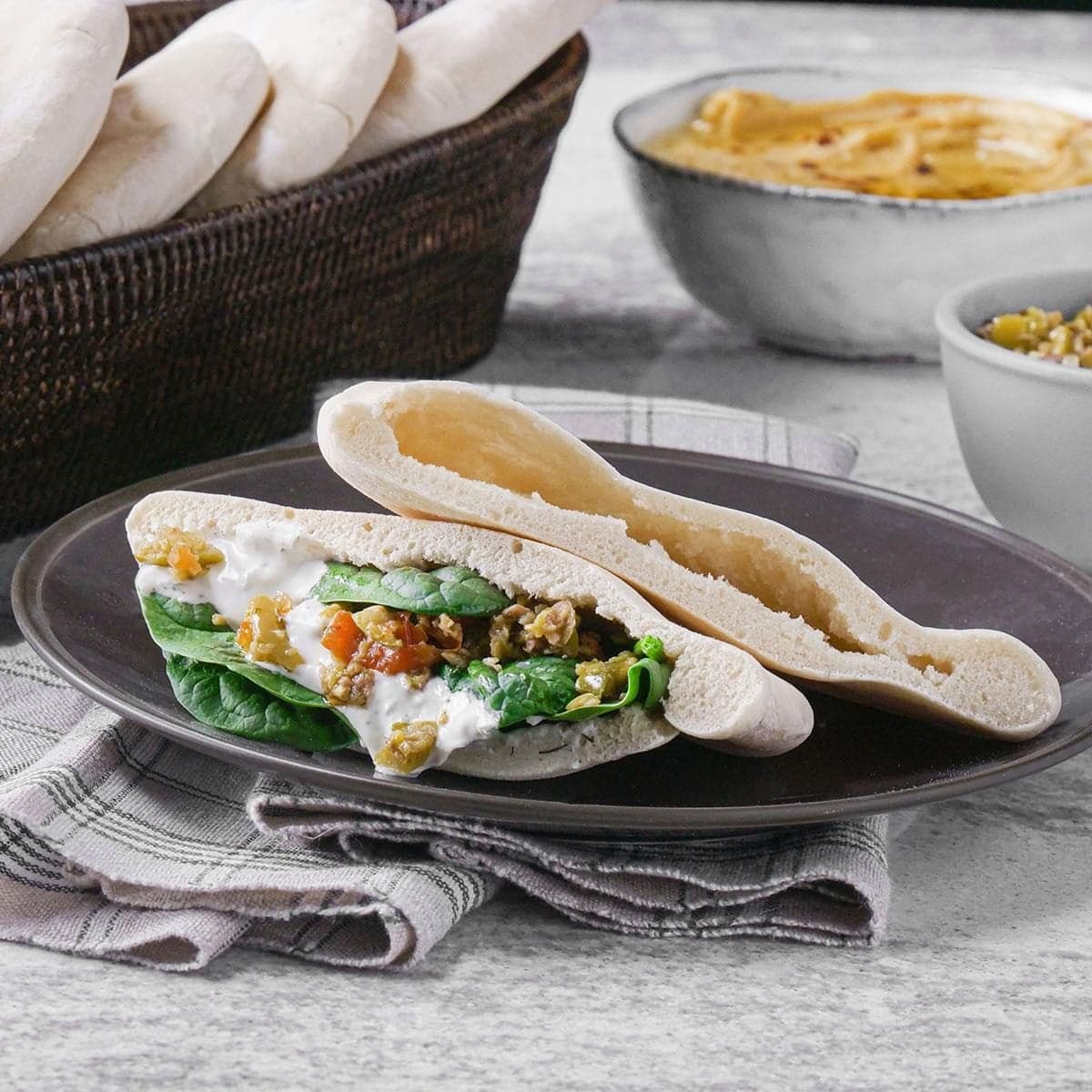
Place the circles on greased baking sheets and bake 5-10 minutes until puffed and lightly browned. This is the payoff: the blast of heat flashes the water inside the dough into steam, the steam has nowhere to go, and it forces the top and bottom apart into that signature pocket. Watch through the oven door; it's genuinely fun. Move them to a wire rack to cool. If one doesn't puff, no worries, a flat pita still tastes fantastic torn into dips.
Sign in to see all instructions
Create a free account to unlock this content
Don't have an account? Sign up free
Homemade Pita Bread (and the Steam-Pocket Science That Makes Them Puff)
Created by: TheBreadNerd
Ingredients
- 1/4 oz active dry yeast
- 1 1/4 cup warm water
- 2 tsp salt
- 3 1/4 cup all-purpose flour
Instructions
- Wake up the yeastIn a large bowl, dissolve the yeast in the warm water. Your water should sit right at 110-115F: warm enough to rouse the yeast, cool enough not to cook it. If it steams or feels hot on your wrist, let it cool. Give it a few minutes until it looks a little cloudy and smells faintly of bread.
- Mix the doughStir in the salt, then add flour a bit at a time until you have a soft dough. Here's the thing about salt: it isn't just for flavor. It tightens up the gluten network so the dough rolls out without tearing, and it slows fermentation so the pitas don't over-proof. Add just enough flour that the dough pulls together but still feels a touch tacky.
- Knead to build glutenTurn the dough onto a floured surface and knead 6-8 minutes until it's smooth and elastic. You're organizing tangled gluten strands into a stretchy, elastic web, and that web is exactly what will trap steam later. When the dough springs back when poked and feels tacky but not sticky, you're there. Do NOT let it rise yet: this is a rest-later dough.
- Divide and roll thinCut the dough into 6 pieces. Working one at a time (keep the rest under a towel so they don't dry out and crust over), knead each piece for 1 minute, then roll it into a 5-inch circle. Roll it evenly and thin, and try not to tear it: a hole is an escape hatch for steam, and a pita that leaks steam won't puff.
- Let the circles riseCover the circles and let them rise in a warm spot until doubled, about 45 minutes. Meanwhile, crank your oven to 500F and let it fully preheat. The high heat is non-negotiable here, so give it the full preheat, and use an oven thermometer if you have one.
- Bake and watch them balloonPlace the circles on greased baking sheets and bake 5-10 minutes until puffed and lightly browned. This is the payoff: the blast of heat flashes the water inside the dough into steam, the steam has nowhere to go, and it forces the top and bottom apart into that signature pocket. Watch through the oven door; it's genuinely fun. Move them to a wire rack to cool. If one doesn't puff, no worries, a flat pita still tastes fantastic torn into dips.