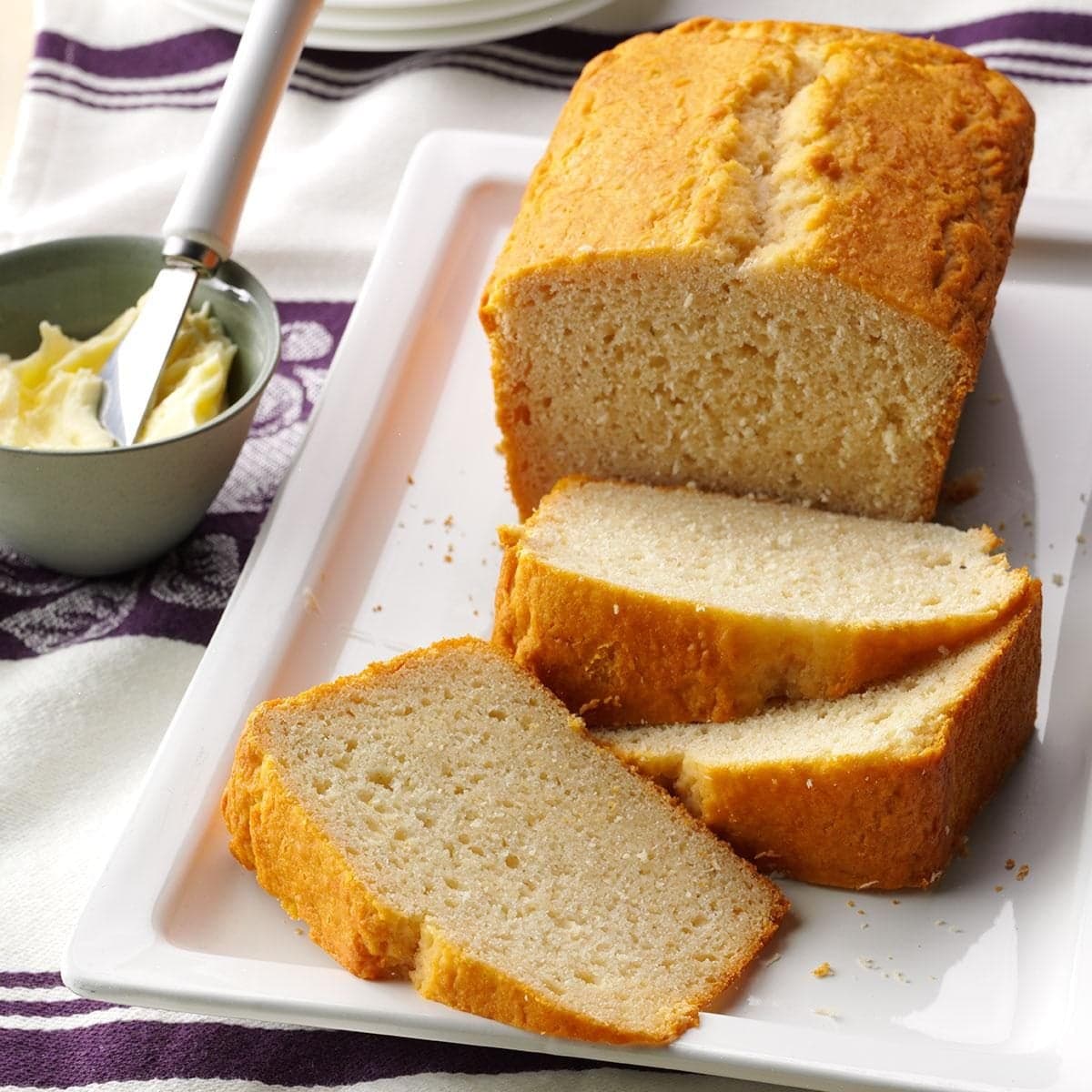
Honey Beer Bread (and the Carbonation Science That Rises It Without Kneading)
Sign in to see ingredients
Create a free account to unlock this content
Don't have an account? Sign up free
Per serving
Calculating nutrition...
- 1
Heat the oven and grease the pan
Heat your oven to 350 degrees F and grease an 8x4-inch loaf pan. Here is the first bit of science: you want the oven fully up to temperature before the batter goes in. The leavening gases expand the instant they hit heat, and that fast early expansion is your oven spring. A cold oven lets the bubbles drift away before they can set, and you lose height.
- 2
Whisk the dry ingredients
In a large bowl, whisk together the self-rising flour and sugar. Self-rising flour is the quiet hero here: it already carries baking powder and a little salt mixed right in, evenly distributed through every spoonful, which is exactly what you want for a no-knead batter bread. Whisking it with the sugar first makes sure the leavening is spread out before any liquid wakes it up.
- 3
Fold in the honey and beer
Pour in the honey and the full bottle of beer, then fold with a spatula just until no dry streaks remain. The batter should look thick, lumpy, and full of bubbles, and that is perfect. Here is why beer works so well: it is doing double duty. The dissolved CO2 from the carbonation gives an instant lift the moment it hits the batter, while the baking powder in the flour reacts with the liquid for a second, slower wave of gas. On top of that, the beer's leftover yeast and malt flavors bake right into the crumb. Resist the urge to keep stirring. Overmixing develops gluten and knocks the bubbles out, and you will trade a tender, open crumb for a dense, rubbery loaf. Lumps are your friend.
- 4
Bake until deep golden
Scrape the batter into the greased pan and smooth the top. Bake 45 to 50 minutes, until the loaf is deep golden brown and a toothpick inserted into the center comes out clean. The color comes from the Maillard reaction plus the sugars in the honey and the malt in the beer caramelizing at the crust, so a darker top means more flavor, not a mistake. Visual cue: tap the top of the loaf. A set loaf sounds hollow and springs back; if it still feels soft and damp, give it a few more minutes.
- 5
Cool before you slice
Let the bread cool in the pan for 10 minutes, then turn it out onto a wire rack to finish cooling. I know it is tempting to cut in while it is warm, but the crumb is still setting as steam escapes and the starches firm up. Slice too early and the knife will drag and gum the interior. Give it at least 20 to 30 minutes on the rack and you will get clean, tender slices.
Sign in to see all instructions
Create a free account to unlock this content
Don't have an account? Sign up free
Honey Beer Bread (and the Carbonation Science That Rises It Without Kneading)
Created by: TheBreadNerd
Ingredients
- 3 cup self-rising flour
- 3 tbsp sugar
- 1/3 cup honey
- 12 oz beer
Instructions
- Heat the oven and grease the panHeat your oven to 350 degrees F and grease an 8x4-inch loaf pan. Here is the first bit of science: you want the oven fully up to temperature before the batter goes in. The leavening gases expand the instant they hit heat, and that fast early expansion is your oven spring. A cold oven lets the bubbles drift away before they can set, and you lose height.
- Whisk the dry ingredientsIn a large bowl, whisk together the self-rising flour and sugar. Self-rising flour is the quiet hero here: it already carries baking powder and a little salt mixed right in, evenly distributed through every spoonful, which is exactly what you want for a no-knead batter bread. Whisking it with the sugar first makes sure the leavening is spread out before any liquid wakes it up.
- Fold in the honey and beerPour in the honey and the full bottle of beer, then fold with a spatula just until no dry streaks remain. The batter should look thick, lumpy, and full of bubbles, and that is perfect. Here is why beer works so well: it is doing double duty. The dissolved CO2 from the carbonation gives an instant lift the moment it hits the batter, while the baking powder in the flour reacts with the liquid for a second, slower wave of gas. On top of that, the beer's leftover yeast and malt flavors bake right into the crumb. Resist the urge to keep stirring. Overmixing develops gluten and knocks the bubbles out, and you will trade a tender, open crumb for a dense, rubbery loaf. Lumps are your friend.
- Bake until deep goldenScrape the batter into the greased pan and smooth the top. Bake 45 to 50 minutes, until the loaf is deep golden brown and a toothpick inserted into the center comes out clean. The color comes from the Maillard reaction plus the sugars in the honey and the malt in the beer caramelizing at the crust, so a darker top means more flavor, not a mistake. Visual cue: tap the top of the loaf. A set loaf sounds hollow and springs back; if it still feels soft and damp, give it a few more minutes.
- Cool before you sliceLet the bread cool in the pan for 10 minutes, then turn it out onto a wire rack to finish cooling. I know it is tempting to cut in while it is warm, but the crumb is still setting as steam escapes and the starches firm up. Slice too early and the knife will drag and gum the interior. Give it at least 20 to 30 minutes on the rack and you will get clean, tender slices.