Sign in to see ingredients
Create a free account to unlock this content
Don't have an account? Sign up free
Per serving
Calculating nutrition...
- 1
Make the tangzhong
Combine 3 tablespoons water, 3 tablespoons whole milk, and 2 tablespoons bread flour in a small saucepan. Whisk over low heat, stirring constantly, until the mixture thickens into a smooth paste and the whisk leaves visible lines, 3–5 minutes. Transfer to a bowl and let cool slightly. This is the magic step: heating flour with liquid causes the starch granules to gelatinize, letting them absorb 5–6x their weight in water and lock it in permanently. That trapped moisture is what keeps this loaf impossibly soft for days instead of going stale overnight.
- 2
Build the dough
In the bowl of a stand mixer, combine 275 grams bread flour, dry milk powder, sugar, salt, and yeast. Add 1/2 cup whole milk, butter, 1 beaten egg, and the cooled tangzhong. Using the dough hook, mix on low until the ingredients come together, about 2 minutes. Cover with a kitchen towel and rest 15 minutes — this short autolyse gives the flour time to fully hydrate and starts gluten formation, making kneading much easier. Then knead until the dough is smooth, elastic, and passes the windowpane test (stretch a small piece thin enough to see light through it without tearing), 6–8 minutes by hook or by hand.
- 3
First rise
Shape the dough into a ball and place in a lightly greased bowl, turning once to coat. Cover and let rise in a warm spot until doubled in size, about 1 hour. To test readiness, flour one finger and poke the dough — if the indent holds and does not spring back, the yeast has done its job. If it bounces back immediately, give it more time. The yeast is producing CO2 gas that inflates the gluten network; rushing this step means less flavor and a denser crumb.
- 4
Divide and shape
Punch down the dough and turn it onto a lightly floured surface. Divide into three equal pieces (use a kitchen scale for precision). One at a time, roll each piece into an 8-inch oval. Fold both long edges into the center, then roll tightly from the bottom into a log, pinching the seam closed. The fold-and-roll technique layers the dough, which creates that signature swirled cross-section and ensures an even, uniform rise. Place all three logs seam-side down in a greased 9x5-inch loaf pan. Cover and let rise until the dough reaches about 1/2 inch below the rim of the pan, 45 minutes to 1 hour. Preheat oven to 350°F.
- 5
Egg wash and bake
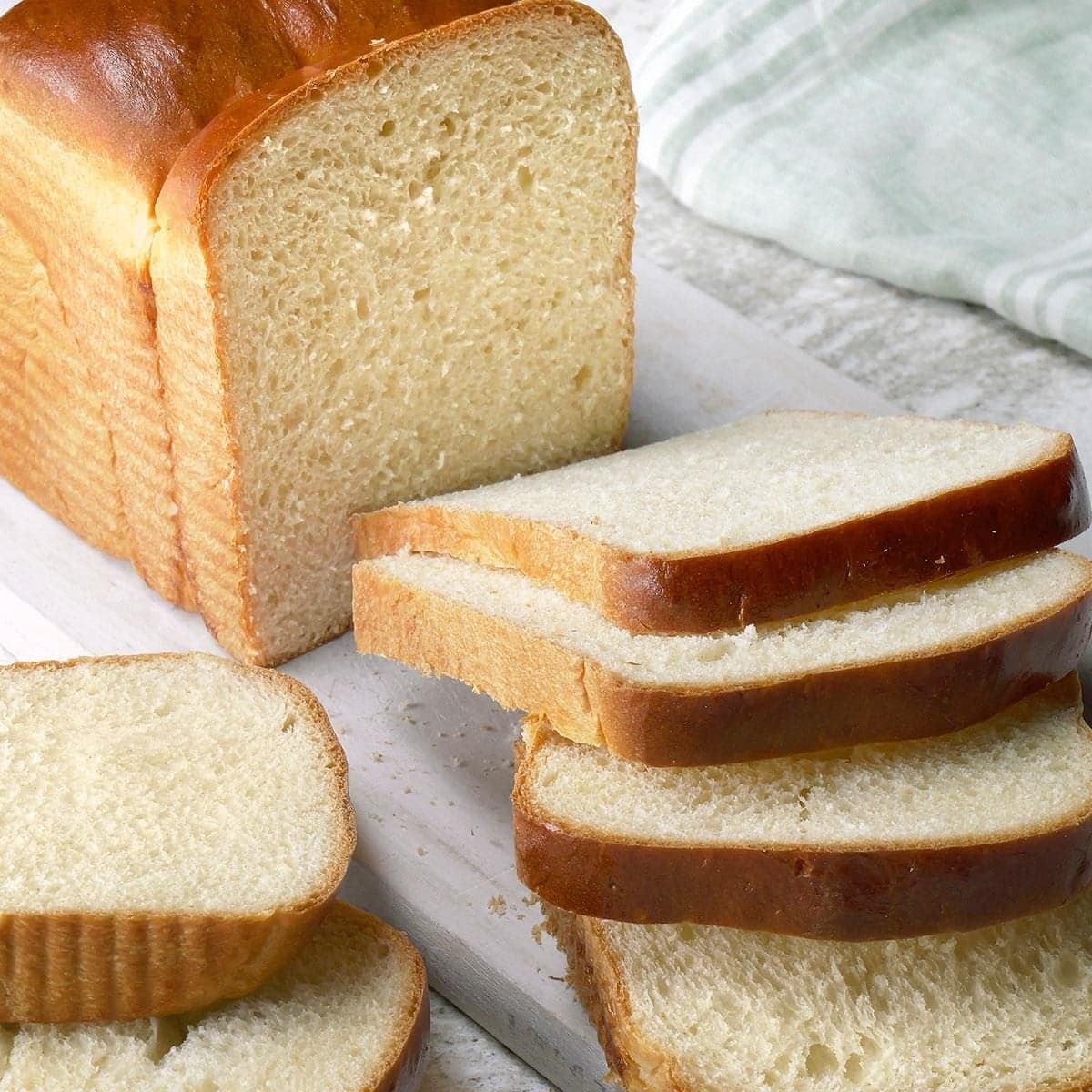
Whisk together the remaining 1 egg and 1 tablespoon cold water. Brush gently over the top of the risen loaf — this gives you that deep mahogany shine through the Maillard reaction, the same browning chemistry behind a great sear on a steak. Bake at 350°F for 30–35 minutes, or until the internal temperature hits at least 190°F. If the top is browning too fast, tent loosely with foil for the last 10–15 minutes. Cool in the pan for 10 minutes, then transfer to a wire rack. Wait until fully cool before slicing — the interior is still setting up as it cools, and cutting too soon releases steam and collapses the crumb structure.
Sign in to see all instructions
Create a free account to unlock this content
Don't have an account? Sign up free
Japanese Milk Bread (Tangzhong Method)
Created by: TheBreadNerd
Ingredients
- 4 tbsp water
- 290 g bread flour
- 2 tbsp dry milk powder
- 3 tbsp sugar
- 1 tsp salt
- 1 tbsp quick-rise yeast
- 2/3 cup whole milk
- 3 tbsp butter
- 2 egg
Instructions
- Make the tangzhongCombine 3 tablespoons water, 3 tablespoons whole milk, and 2 tablespoons bread flour in a small saucepan. Whisk over low heat, stirring constantly, until the mixture thickens into a smooth paste and the whisk leaves visible lines, 3–5 minutes. Transfer to a bowl and let cool slightly. This is the magic step: heating flour with liquid causes the starch granules to gelatinize, letting them absorb 5–6x their weight in water and lock it in permanently. That trapped moisture is what keeps this loaf impossibly soft for days instead of going stale overnight.
- Build the doughIn the bowl of a stand mixer, combine 275 grams bread flour, dry milk powder, sugar, salt, and yeast. Add 1/2 cup whole milk, butter, 1 beaten egg, and the cooled tangzhong. Using the dough hook, mix on low until the ingredients come together, about 2 minutes. Cover with a kitchen towel and rest 15 minutes — this short autolyse gives the flour time to fully hydrate and starts gluten formation, making kneading much easier. Then knead until the dough is smooth, elastic, and passes the windowpane test (stretch a small piece thin enough to see light through it without tearing), 6–8 minutes by hook or by hand.
- First riseShape the dough into a ball and place in a lightly greased bowl, turning once to coat. Cover and let rise in a warm spot until doubled in size, about 1 hour. To test readiness, flour one finger and poke the dough — if the indent holds and does not spring back, the yeast has done its job. If it bounces back immediately, give it more time. The yeast is producing CO2 gas that inflates the gluten network; rushing this step means less flavor and a denser crumb.
- Divide and shapePunch down the dough and turn it onto a lightly floured surface. Divide into three equal pieces (use a kitchen scale for precision). One at a time, roll each piece into an 8-inch oval. Fold both long edges into the center, then roll tightly from the bottom into a log, pinching the seam closed. The fold-and-roll technique layers the dough, which creates that signature swirled cross-section and ensures an even, uniform rise. Place all three logs seam-side down in a greased 9x5-inch loaf pan. Cover and let rise until the dough reaches about 1/2 inch below the rim of the pan, 45 minutes to 1 hour. Preheat oven to 350°F.
- Egg wash and bakeWhisk together the remaining 1 egg and 1 tablespoon cold water. Brush gently over the top of the risen loaf — this gives you that deep mahogany shine through the Maillard reaction, the same browning chemistry behind a great sear on a steak. Bake at 350°F for 30–35 minutes, or until the internal temperature hits at least 190°F. If the top is browning too fast, tent loosely with foil for the last 10–15 minutes. Cool in the pan for 10 minutes, then transfer to a wire rack. Wait until fully cool before slicing — the interior is still setting up as it cools, and cutting too soon releases steam and collapses the crumb structure.