Sign in to see ingredients
Create a free account to unlock this content
Don't have an account? Sign up free
Per serving
Calculating nutrition...
- 1
Activate the Yeast
Stir together 2 cups warm water (aim for 105°F to 110°F — warm like a bath, not hot), the yeast, and sugar in a large measuring cup or bowl. Let sit for 5 to 10 minutes until the surface looks bubbly and smells yeasty. Cold water won't wake the yeast up; water above 120°F will kill it outright.
- 2
Mix the Dough
In a large bowl, whisk together the flour and salt. Make a well in the center, pour in the yeast mixture, and stir with a wooden spoon until a rough, shaggy dough forms and pulls away from the sides. The dough will be quite sticky — that's intentional. A wetter dough lets gluten develop on its own without any kneading.
- 3
First Rise
Transfer the dough to a lightly greased bowl, cover with plastic wrap or a kitchen towel, and set in a warm spot until doubled in size, about 1½ to 2 hours. A 70°F kitchen is the sweet spot; a cold kitchen will significantly slow the rise. If your kitchen is chilly, the oven with just the light on works perfectly.
- 4
Shape the Dough
Dust a sheet of parchment paper generously with flour. Tip the dough out onto the parchment and, with well-floured hands, gently fold the edges toward the center to form a loose ball. Don't stress about perfection — this is a rustic loaf and a few cracks add character. Lift the parchment and dough ball into a smaller bowl, cover, and let rise again for 30 to 60 minutes.
- 5
Preheat the Dutch Oven
While the dough has its second rise, place your 4 to 6-quart cast iron Dutch oven and its lid into the oven. Preheat to 470°F. This is the key step: the blazing-hot pot hits the wet dough and converts surface moisture into a burst of steam instantly, which keeps the crust pliable long enough for the loaf to fully expand before the crust sets. Do not skip this.
- 6
Bake
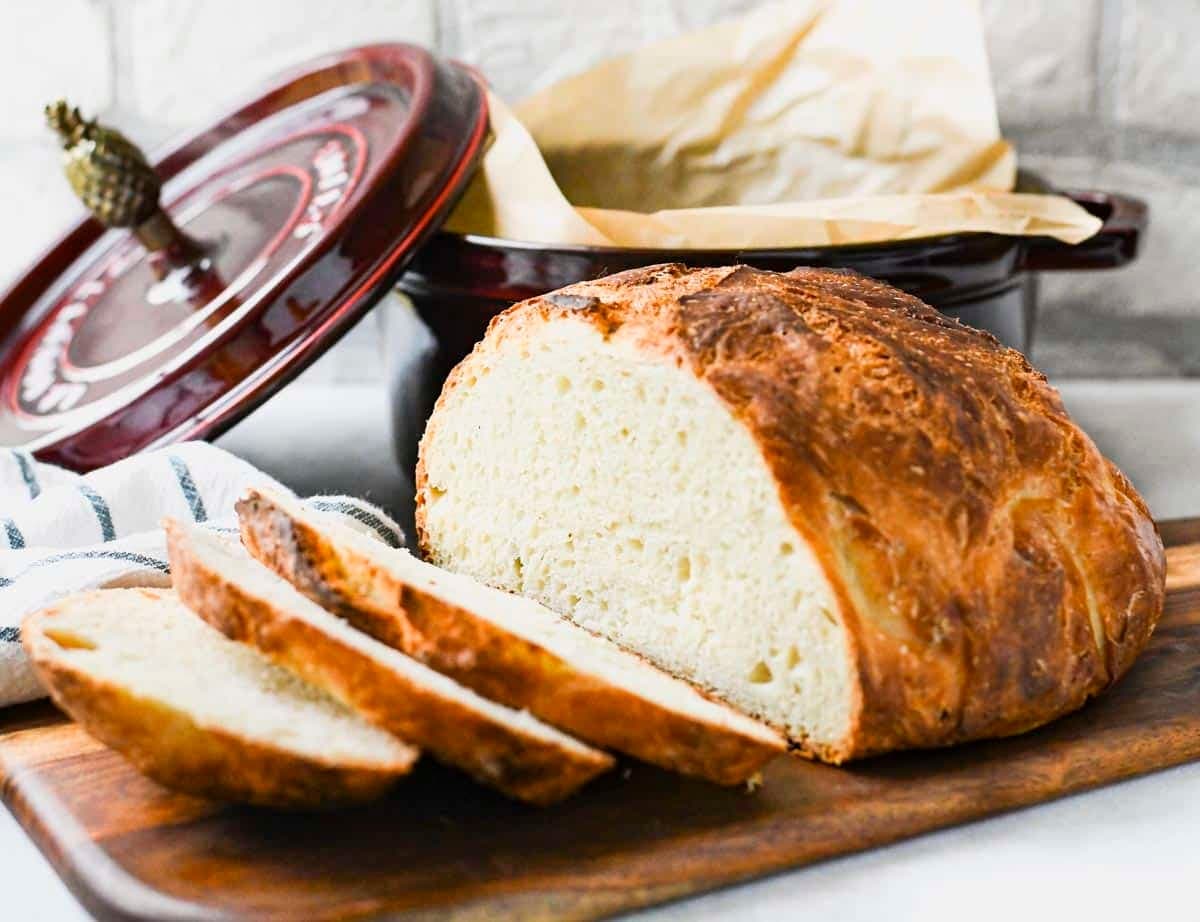
Once the oven reaches temperature and the dough has finished its second rise, carefully remove the Dutch oven using oven mitts — it will be extremely hot. Use the parchment paper to lift the dough ball and lower it gently into the pot. Cover with the lid and bake at 470°F for 30 minutes. Then remove the lid and bake an additional 10 to 15 minutes until the crust is deep golden brown. Watch it closely in the final minutes.
- 7
Cool Before Slicing
Lift the loaf out using the parchment paper and transfer to a wire cooling rack. Wait at least 1 hour before slicing. I know it's painful. But the interior is still cooking via carryover heat, and cutting too early releases the steam and turns the crumb gummy. The crackling you hear as it cools is the crust contracting — a very good sound.
Sign in to see all instructions
Create a free account to unlock this content
Don't have an account? Sign up free
No-Knead Dutch Oven Bread (The Steam Is the Secret)
Created by: TheBreadNerd
Ingredients
- 2 cup water
- 2 1/4 tsp active dry yeast
- 1 tbsp sugar
- 4 cup all-purpose flour
- 1 tbsp kosher salt
Instructions
- Activate the YeastStir together 2 cups warm water (aim for 105°F to 110°F — warm like a bath, not hot), the yeast, and sugar in a large measuring cup or bowl. Let sit for 5 to 10 minutes until the surface looks bubbly and smells yeasty. Cold water won't wake the yeast up; water above 120°F will kill it outright.
- Mix the DoughIn a large bowl, whisk together the flour and salt. Make a well in the center, pour in the yeast mixture, and stir with a wooden spoon until a rough, shaggy dough forms and pulls away from the sides. The dough will be quite sticky — that's intentional. A wetter dough lets gluten develop on its own without any kneading.
- First RiseTransfer the dough to a lightly greased bowl, cover with plastic wrap or a kitchen towel, and set in a warm spot until doubled in size, about 1½ to 2 hours. A 70°F kitchen is the sweet spot; a cold kitchen will significantly slow the rise. If your kitchen is chilly, the oven with just the light on works perfectly.
- Shape the DoughDust a sheet of parchment paper generously with flour. Tip the dough out onto the parchment and, with well-floured hands, gently fold the edges toward the center to form a loose ball. Don't stress about perfection — this is a rustic loaf and a few cracks add character. Lift the parchment and dough ball into a smaller bowl, cover, and let rise again for 30 to 60 minutes.
- Preheat the Dutch OvenWhile the dough has its second rise, place your 4 to 6-quart cast iron Dutch oven and its lid into the oven. Preheat to 470°F. This is the key step: the blazing-hot pot hits the wet dough and converts surface moisture into a burst of steam instantly, which keeps the crust pliable long enough for the loaf to fully expand before the crust sets. Do not skip this.
- BakeOnce the oven reaches temperature and the dough has finished its second rise, carefully remove the Dutch oven using oven mitts — it will be extremely hot. Use the parchment paper to lift the dough ball and lower it gently into the pot. Cover with the lid and bake at 470°F for 30 minutes. Then remove the lid and bake an additional 10 to 15 minutes until the crust is deep golden brown. Watch it closely in the final minutes.
- Cool Before SlicingLift the loaf out using the parchment paper and transfer to a wire cooling rack. Wait at least 1 hour before slicing. I know it's painful. But the interior is still cooking via carryover heat, and cutting too early releases the steam and turns the crumb gummy. The crackling you hear as it cools is the crust contracting — a very good sound.