Overnight Brioche Rolls (Why All That Butter Makes Them So Tender)
Sign in to see ingredients
Create a free account to unlock this content
Don't have an account? Sign up free
Per serving
Calculating nutrition...
- 1
Make the batter-like dough
In a large bowl, whisk together 1-1/2 cups of the flour, the sugar, yeast, lemon zest and salt. Cube the butter and heat it with the milk in a small saucepan to 120-130°F — warm enough to wake the yeast up fast, but under the ~140°F zone where you'd start killing it. Pour the warm butter-milk into the dry ingredients and beat until moistened. Add 4 of the eggs (save the fifth for the egg wash) and beat on medium for 2 minutes. Add 1 cup flour and beat until smooth, then stir in the remaining 1 cup flour. Do NOT knead — this dough is so rich with butter and egg that the fat coats the gluten strands and keeps them short. That's literally why it bakes up tender instead of chewy. The dough will look shaggy and sticky. That's correct.
- 2
First rise, then the overnight cold retard
Spoon the dough into a greased bowl, turning once to grease the top. Cover and let rise somewhere warm until doubled, about 1 hour — look for a puffy, pillowy dome, not the clock. Stir the dough down, cover, and refrigerate overnight. This chill does two jobs: the cold firms up all that butter so tomorrow you can actually shape a dough that would otherwise be a greasy mess, and the slow overnight fermentation builds way more flavor than a same-day dough ever could.
- 3
Shape the rolls
Preheat the oven to 375°F. Punch the dough down and turn it onto a lightly floured surface. Cover and let it rest 15 minutes so the gluten relaxes — skip this and the dough fights you, snapping back every time you shape it. Cut off one-sixth of the dough and set it aside. Shape the rest into 12 balls (about 2-1/2 inches) and drop them into well-greased muffin cups.
- 4
Add the topknots
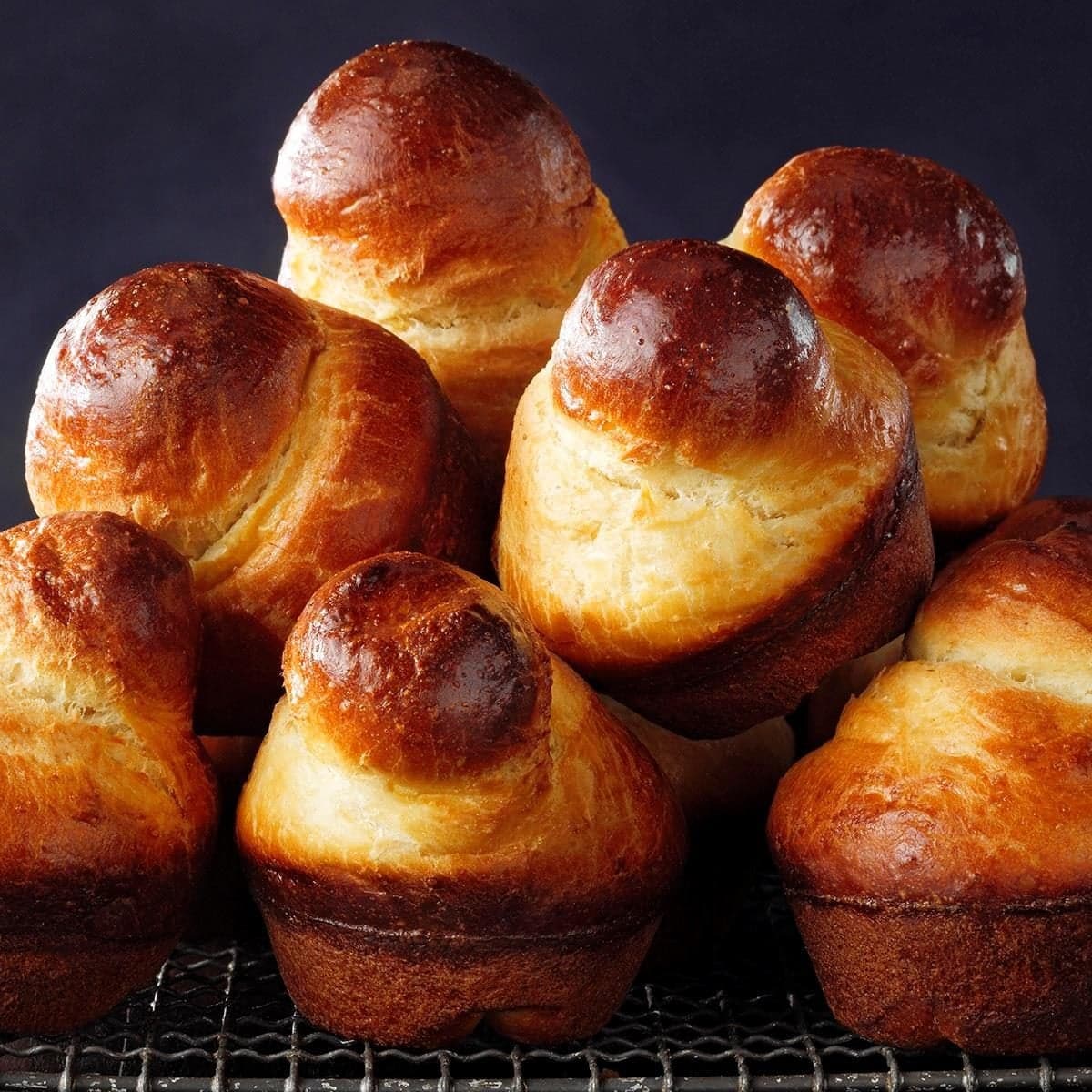
Divide the reserved dough into 12 small balls. Press a deep indentation into the center of each large ball and nestle a small ball into each one — that's the classic brioche à tête shape, the little 'head' you see at French bakeries. Make the indentation deeper than feels reasonable, or the topknots pop off sideways in the oven as the dough expands. Cover and let rise in a warm place until doubled, about 1 hour — they should look puffy and fill the cups.
- 5
Egg wash and bake
Beat the remaining egg and brush it over the rolls. The egg proteins and a little sugar on the surface supercharge the Maillard reaction, which is why brioche gets that glossy, deep mahogany crust instead of a dull brown one. Bake 15-20 minutes, until golden brown all over. Remove from the pan to a wire rack to cool — leave them in the muffin tin and the trapped steam softens that crust you just worked for.
Sign in to see all instructions
Create a free account to unlock this content
Don't have an account? Sign up free
Overnight Brioche Rolls (Why All That Butter Makes Them So Tender)
Created by: TheBreadNerd
Ingredients
- 3 1/2 cup all-purpose flour
- 1/2 cup sugar
- 4 1/2 tsp active dry yeast
- 1 tsp lemon zest
- 1/2 tsp salt
- 2/3 cup butter
- 1/2 cup milk
- 5 eggs
Instructions
- Make the batter-like doughIn a large bowl, whisk together 1-1/2 cups of the flour, the sugar, yeast, lemon zest and salt. Cube the butter and heat it with the milk in a small saucepan to 120-130°F — warm enough to wake the yeast up fast, but under the ~140°F zone where you'd start killing it. Pour the warm butter-milk into the dry ingredients and beat until moistened. Add 4 of the eggs (save the fifth for the egg wash) and beat on medium for 2 minutes. Add 1 cup flour and beat until smooth, then stir in the remaining 1 cup flour. Do NOT knead — this dough is so rich with butter and egg that the fat coats the gluten strands and keeps them short. That's literally why it bakes up tender instead of chewy. The dough will look shaggy and sticky. That's correct.
- First rise, then the overnight cold retardSpoon the dough into a greased bowl, turning once to grease the top. Cover and let rise somewhere warm until doubled, about 1 hour — look for a puffy, pillowy dome, not the clock. Stir the dough down, cover, and refrigerate overnight. This chill does two jobs: the cold firms up all that butter so tomorrow you can actually shape a dough that would otherwise be a greasy mess, and the slow overnight fermentation builds way more flavor than a same-day dough ever could.
- Shape the rollsPreheat the oven to 375°F. Punch the dough down and turn it onto a lightly floured surface. Cover and let it rest 15 minutes so the gluten relaxes — skip this and the dough fights you, snapping back every time you shape it. Cut off one-sixth of the dough and set it aside. Shape the rest into 12 balls (about 2-1/2 inches) and drop them into well-greased muffin cups.
- Add the topknotsDivide the reserved dough into 12 small balls. Press a deep indentation into the center of each large ball and nestle a small ball into each one — that's the classic brioche à tête shape, the little 'head' you see at French bakeries. Make the indentation deeper than feels reasonable, or the topknots pop off sideways in the oven as the dough expands. Cover and let rise in a warm place until doubled, about 1 hour — they should look puffy and fill the cups.
- Egg wash and bakeBeat the remaining egg and brush it over the rolls. The egg proteins and a little sugar on the surface supercharge the Maillard reaction, which is why brioche gets that glossy, deep mahogany crust instead of a dull brown one. Bake 15-20 minutes, until golden brown all over. Remove from the pan to a wire rack to cool — leave them in the muffin tin and the trapped steam softens that crust you just worked for.