Sign in to see ingredients
Create a free account to unlock this content
Don't have an account? Sign up free
Per serving
Calculating nutrition...
- 1
Wake up the yeast and mix the dough
Dissolve the active dry yeast in the warm water (110-115°F — any hotter and you'll kill it, you'll be able to tell because it won't get foamy after a few minutes). Add the sourdough starter, oil, sugar, salt, and 3 cups of the flour. Beat until smooth. Here's the trick this recipe pulls: the commercial yeast does the heavy lifting on rise, while the starter just rides along adding tang and complexity. You get sourdough flavor without betting the whole loaf on a starter that might be having a slow week. Stir in just enough of the remaining flour to form a soft dough.
- 2
Knead and let gluten do its thing
Turn the dough onto a floured surface and knead gently 20-30 times — it should still feel slightly sticky, don't over-flour it. Every fold and push aligns gluten strands into a stretchy network that will trap gas bubbles later; that's what gives French bread its open, chewy crumb instead of a dense brick. Place the dough in a greased bowl, turning once to grease the top, cover, and let it rise in a warm spot until doubled, 1 to 1.5 hours. You'll know it's ready when a poke leaves an indent that slowly springs back halfway.
- 3
Shape the loaves
Preheat the oven to 400°F. Punch down the dough to release the built-up gas, then divide it in half. Roll each half into a roughly 12x8-inch rectangle and roll it up jelly-roll style starting from a long side — this creates surface tension on the outside of the loaf, which is what lets it hold a tall, even shape instead of spreading flat. Pinch the seam to seal, place seam-side down on greased baking sheets, tuck the ends under, cover, and let rise until doubled again, about 30 minutes.
- 4
Score and glaze
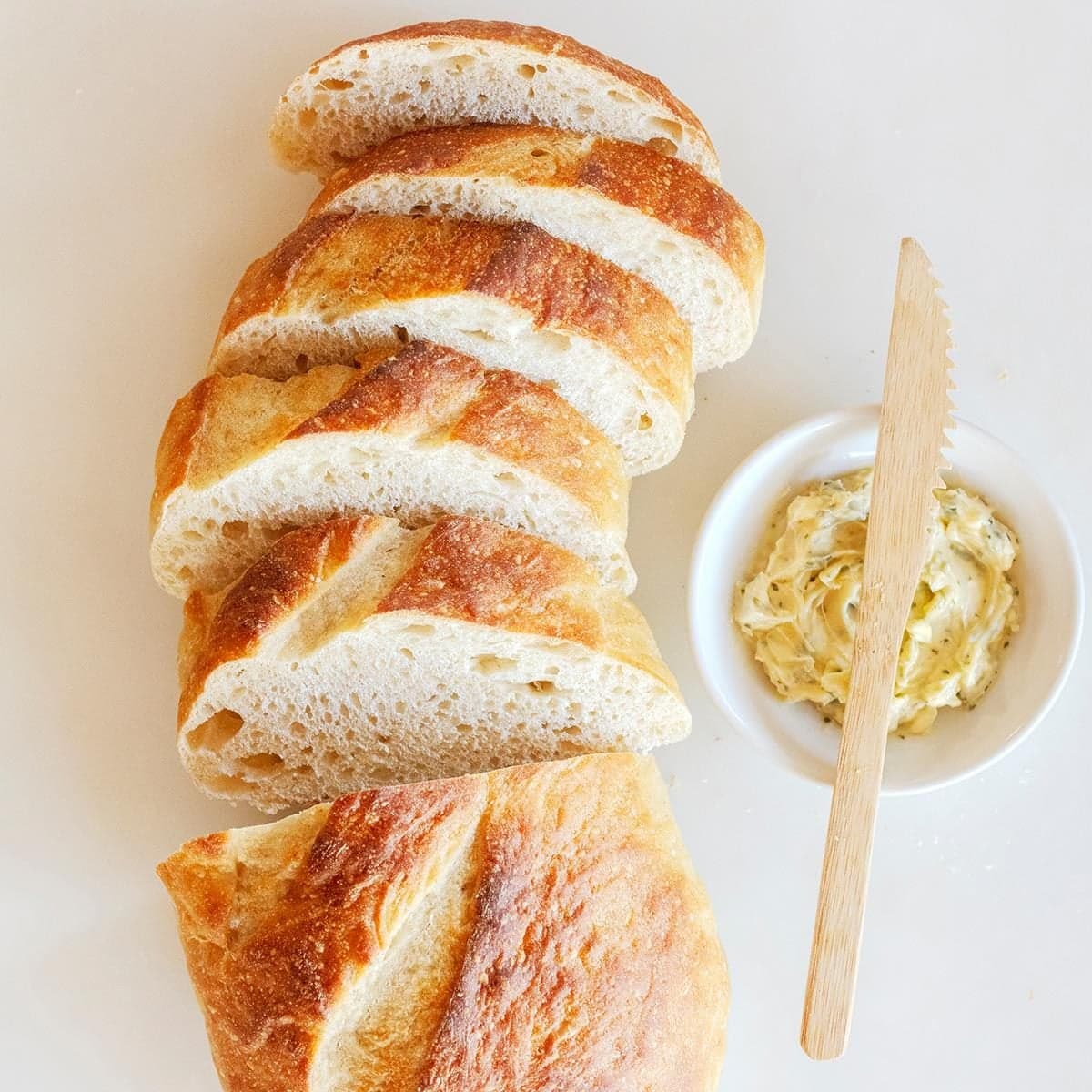
With a sharp knife or lame, cut 4 shallow diagonal slashes across the top of each loaf. Scoring isn't decorative — it gives the dough a pre-determined weak point to expand through in the oven, so it doesn't tear randomly on the sides. Combine the water and cornstarch in a small saucepan and cook over medium heat, stirring, until thickened into a glaze. Brush some over the loaves. A cornstarch wash gelatinizes in the oven's heat and dries into a glassy, crackly sheen — it's why bakery French bread looks shiny and shatters slightly when you tear it, instead of going soft and matte like an egg wash would.
- 5
Bake
Bake for 15 minutes, then brush with the remaining cornstarch glaze and continue baking another 5-10 minutes until deep golden brown. The first blast of heat sets the crust and triggers oven spring — that last burst of rise from trapped steam and CO2 expanding before the crust firms up enough to stop it. Cool on wire racks before slicing, the crumb is still setting internally even after the crust feels done.
Sign in to see all instructions
Create a free account to unlock this content
Don't have an account? Sign up free
Sourdough French Bread, the Beginner-Proof Way
Created by: TheBreadNerd
Ingredients
- 1/4 oz active dry yeast
- 1 3/4 cup warm water
- 1/4 cup sourdough starter
- 2 tbsp canola oil
- 2 tbsp sugar
- 2 tsp salt
- 4 1/4 cup all-purpose flour
- 1/2 cup water
- 1 1/2 tsp cornstarch
Instructions
- Wake up the yeast and mix the doughDissolve the active dry yeast in the warm water (110-115°F — any hotter and you'll kill it, you'll be able to tell because it won't get foamy after a few minutes). Add the sourdough starter, oil, sugar, salt, and 3 cups of the flour. Beat until smooth. Here's the trick this recipe pulls: the commercial yeast does the heavy lifting on rise, while the starter just rides along adding tang and complexity. You get sourdough flavor without betting the whole loaf on a starter that might be having a slow week. Stir in just enough of the remaining flour to form a soft dough.
- Knead and let gluten do its thingTurn the dough onto a floured surface and knead gently 20-30 times — it should still feel slightly sticky, don't over-flour it. Every fold and push aligns gluten strands into a stretchy network that will trap gas bubbles later; that's what gives French bread its open, chewy crumb instead of a dense brick. Place the dough in a greased bowl, turning once to grease the top, cover, and let it rise in a warm spot until doubled, 1 to 1.5 hours. You'll know it's ready when a poke leaves an indent that slowly springs back halfway.
- Shape the loavesPreheat the oven to 400°F. Punch down the dough to release the built-up gas, then divide it in half. Roll each half into a roughly 12x8-inch rectangle and roll it up jelly-roll style starting from a long side — this creates surface tension on the outside of the loaf, which is what lets it hold a tall, even shape instead of spreading flat. Pinch the seam to seal, place seam-side down on greased baking sheets, tuck the ends under, cover, and let rise until doubled again, about 30 minutes.
- Score and glazeWith a sharp knife or lame, cut 4 shallow diagonal slashes across the top of each loaf. Scoring isn't decorative — it gives the dough a pre-determined weak point to expand through in the oven, so it doesn't tear randomly on the sides. Combine the water and cornstarch in a small saucepan and cook over medium heat, stirring, until thickened into a glaze. Brush some over the loaves. A cornstarch wash gelatinizes in the oven's heat and dries into a glassy, crackly sheen — it's why bakery French bread looks shiny and shatters slightly when you tear it, instead of going soft and matte like an egg wash would.
- BakeBake for 15 minutes, then brush with the remaining cornstarch glaze and continue baking another 5-10 minutes until deep golden brown. The first blast of heat sets the crust and triggers oven spring — that last burst of rise from trapped steam and CO2 expanding before the crust firms up enough to stop it. Cool on wire racks before slicing, the crumb is still setting internally even after the crust feels done.