Steamed Boston Brown Bread (and the No-Oven Science Behind It)
Sign in to see ingredients
Create a free account to unlock this content
Don't have an account? Sign up free
Per serving
Calculating nutrition...
- 1
Whisk the dry ingredients
In a large bowl, whisk together the cornmeal, whole wheat flour, rye flour, baking powder, baking soda, and salt. Here is the fun part: there is no yeast and no kneading anywhere in this recipe. That means you are not building a gluten network like you would in a sandwich loaf. This is a quick bread, so chemistry does all the lifting, and the three different flours are purely about flavor and that classic dense, earthy crumb.
- 2
Whisk the wet ingredients
In a second bowl, whisk the buttermilk, molasses, brown sugar, and canola oil until smooth. Pay attention to these two: buttermilk and molasses are both acidic. That acid is not an accident. It is exactly what wakes up the baking soda in step one, kicking off the carbon dioxide bubbles that leaven the loaf. No acid, no lift.
- 3
Combine gently (resist the urge to overmix)
Pour the wet mixture into the dry and stir just until everything is moistened. A few streaks of flour are totally fine, and the batter should look thick and a little lumpy, not smooth. Overmixing a quick bread wakes up what little gluten these flours have and turns a tender loaf into a rubbery one, so stop early. Fold in the toasted, chopped walnuts and the raisins.
- 4
Fill the pan and seal it
Grease an 8x4-inch loaf pan, scrape in the batter, and cover the top tightly with foil. The foil matters: it keeps condensation from dripping onto the loaf and turning the top gummy, while trapping the batter's own steam so it cooks evenly from all sides.
- 5
Steam, do not bake
Set the covered pan on a rack inside a large, deep pot and pour in about 1 inch of hot water. Bring it to a gentle boil, cover the pot, and let it steam for 45 to 50 minutes, topping off the water if it runs low, until a toothpick inserted in the center comes out clean. This is the whole trick: steam holds the bread at around 212F in a humid environment, which is gentler than a dry oven. That is why Boston brown bread comes out moist, dark, and soft all the way through with no hard crust.
- 6
Rest, release, and serve
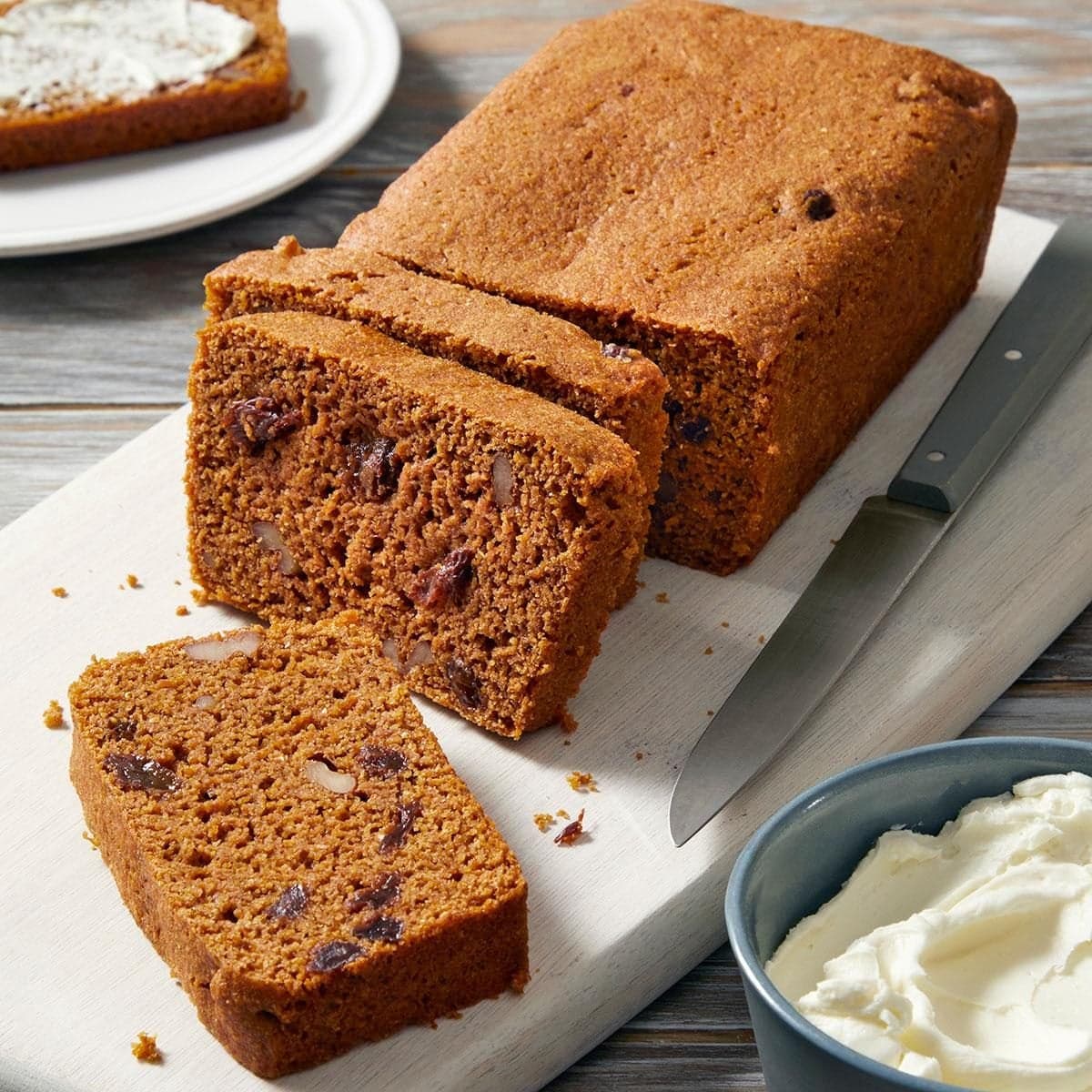
Let the pan stand for 10 minutes so the loaf can firm up and pull away from the sides, then turn it out onto a wire rack. It slices cleanest once it has cooled a bit. Classic move: spread thick slices with softened cream cheese.
Sign in to see all instructions
Create a free account to unlock this content
Don't have an account? Sign up free
Steamed Boston Brown Bread (and the No-Oven Science Behind It)
Created by: TheBreadNerd
Ingredients
- 1/2 cup cornmeal
- 1/2 cup whole wheat flour
- 1/2 cup rye flour
- 1/2 tsp baking powder
- 1/2 tsp baking soda
- 1/4 tsp salt
- 1 cup buttermilk
- 1/3 cup molasses
- 2 tbsp brown sugar
- 1 tbsp canola oil
- 3 tbsp walnuts
- 3 tbsp raisins
Instructions
- Whisk the dry ingredientsIn a large bowl, whisk together the cornmeal, whole wheat flour, rye flour, baking powder, baking soda, and salt. Here is the fun part: there is no yeast and no kneading anywhere in this recipe. That means you are not building a gluten network like you would in a sandwich loaf. This is a quick bread, so chemistry does all the lifting, and the three different flours are purely about flavor and that classic dense, earthy crumb.
- Whisk the wet ingredientsIn a second bowl, whisk the buttermilk, molasses, brown sugar, and canola oil until smooth. Pay attention to these two: buttermilk and molasses are both acidic. That acid is not an accident. It is exactly what wakes up the baking soda in step one, kicking off the carbon dioxide bubbles that leaven the loaf. No acid, no lift.
- Combine gently (resist the urge to overmix)Pour the wet mixture into the dry and stir just until everything is moistened. A few streaks of flour are totally fine, and the batter should look thick and a little lumpy, not smooth. Overmixing a quick bread wakes up what little gluten these flours have and turns a tender loaf into a rubbery one, so stop early. Fold in the toasted, chopped walnuts and the raisins.
- Fill the pan and seal itGrease an 8x4-inch loaf pan, scrape in the batter, and cover the top tightly with foil. The foil matters: it keeps condensation from dripping onto the loaf and turning the top gummy, while trapping the batter's own steam so it cooks evenly from all sides.
- Steam, do not bakeSet the covered pan on a rack inside a large, deep pot and pour in about 1 inch of hot water. Bring it to a gentle boil, cover the pot, and let it steam for 45 to 50 minutes, topping off the water if it runs low, until a toothpick inserted in the center comes out clean. This is the whole trick: steam holds the bread at around 212F in a humid environment, which is gentler than a dry oven. That is why Boston brown bread comes out moist, dark, and soft all the way through with no hard crust.
- Rest, release, and serveLet the pan stand for 10 minutes so the loaf can firm up and pull away from the sides, then turn it out onto a wire rack. It slices cleanest once it has cooled a bit. Classic move: spread thick slices with softened cream cheese.